What Is AI Bias — and Why Should You Care?
AI bias happens when an AI system gives results that are consistently unfair, discriminatory, or favour certain groups over others. Bias doesn’t necessarily happen on purpose; it sneaks into AI through bad training data, biased human assumptions, and poorly written algorithms. An AI that learns from recruiting data that has mostly men in it will unconsciously favour men.
A healthcare AI that is based on small demographic datasets will not work as well for patients who are not well represented. AI bias is problematic on a large scale since it is hard to see. Artificial intelligence bias is no more a hypothetical worry; it is actually affecting choices that affect people’s health, freedom, jobs, and chances every day. When a biased algorithm turns down a loan, a job application, or wrongly identifies someone to the police, the results are very real.
“That is precisely why we present — 7 Essential Strategies to Mitigate AI Bias and Enhance Fairness in Technology” — a powerful, actionable roadmap designed to help individuals and organizations tackle this growing challenge head-on. AI prejudice works on a huge scale, making millions of wrong decisions at once, while human bias only influences one decision at a time. Everyone who lives in a world powered by AI has a duty to understand and fight against AI bias.
Table of Contents
Real-World Examples of AI Bias
AI bias isn’t just a theory; it’s happening right now in businesses that have a direct impact on people’s lives. Hiring tools have been shown to consistently turn down older women who apply. Healthcare AI has said that men’s health problems are more complicated than women’s, even though they have the same needs. Facial recognition systems get darker-skinned people wrong a lot more often than lighter-skinned people. Predictive policing systems unfairly target some neighbourhoods based on past data, which makes discrimination worse instead of better.
Hiring Tools:
A big research that came out in Nature in October 2025 discovered that massive language models have deep-seated biases against older women in the workplace. This groundbreaking research serves as a stark and urgent reminder that AI Bias — left undetected and unchallenged, quietly embeds itself into the very algorithms that determine people’s professional futures, opportunities, and livelihoods at a massive, unprecedented scale. This affects how AI rates job prospects.
AI-powered hiring tools are supposed to make hiring faster and easier, but they often include hidden bias. These systems learn from past recruiting data, which often shows bias against certain genders, ages, or levels of education. Mobley v. Workday was a landmark case that showed how an AI screening algorithm turned down a suitable applicant for more than 100 job applications. These tools don’t do rid of human bias in recruiting; instead, they could automate and scale it, without anyone noticing, and at an unparalleled speed.
Healthcare:
A study by the London School of Economics used AI to create social care summaries that said men’s health problems were “more complex” than women’s with similar demands. This is a gender bias that could lead to not enough care being given. This deeply troubling clinical evidence powerfully illustrates how unchecked AI Bias — embedded within healthcare algorithms, silently and systematically distorts life-critical medical decisions, directly determining who receives adequate care and who is dangerously and unjustly left underserved. AI in healthcare offers faster diagnosis and improved outcomes for patients, yet bias in these algorithms can kill people.
A compelling study conducted by the London School of Economics revealed that AI-generated social care summaries consistently classified men’s health issues as more “complex” than those of women with equal medical requirements. This bias against women directly affects how care is given out, which could mean that women don’t get enough care. When AI is in charge of medicine, even slight biases can affect millions of patients. This is why fairness in healthcare AI is so important.
Hiring Lawsuits:
As AI-powered hiring tools grow more common in employment processes around the world, a wave of major legal problems is quickly following. Employers are giving algorithms the power to make important recruiting choices, but those algorithms are not fair. They have concealed biases that make it harder for some candidates to get hired depending on their race, age, gender, or disability.
People looking for jobs who are affected are no longer keeping quiet. When an algorithm discriminates, who is fully responsible under the law? This is a difficult and critical subject that present employment law was never meant to answer. The famous case **Mobley v. Workday** changed the way AI hiring is held accountable. A highly skilled job seeker said that Workday’s AI-based screening algorithm turned him down for more than 100 job applications because of his race, age, or disability.
This instance showed how one biased algorithm can destroy someone’s job prospects on a scale never seen before. It was a strong warning to any companies that use AI recruiting tools: algorithmic discrimination has the same significant legal ramifications as intentional human prejudice.
Facial Recognition:
AI-based methods for figuring out a person’s gender make mistakes up to 34% more often for women with darker skin than for men with lighter skin. One of the most obviously biased AI systems is facial recognition technology. Studies have consistently demonstrated that these systems work more worse on those with darker skin.
For example, women with darker skin make more mistakes than men with lighter skin. This isn’t a small technical problem; it has serious effects. Due to the AI being trained on image datasets that weren’t very varied, people have been erroneously jailed, denied access to services, and misidentified in security systems. Having a fair amount of representation in training data is an issue of fairness.
Predictive Policing:

AI technologies target certain neighbourhoods using past data, which leads to over-policing that doesn’t take into account how things have evolved. AI is used by predictive policing technologies to guess where crimes are most likely to happen, but the historical data they utilise is quite bad. Because some neighbourhoods were over-policed in the past, that bias is built right into the training data.
The AI then goes after those same communities again, which makes the loop dangerous since more policing leads to more arrests, which leads to more biased data, which leads to more policing. Instead of objectively predicting crime, these systems automate and institutionalise historical discrimination on a large scale using algorithms.
7 Proven Ways to Eliminate AI Bias
AI bias is when AI systems make decisions that are unjust or biased, yet people often don’t even know it. This title says that it will provide you seven useful, research-based tips that anyone can comprehend and use, no matter how much technical knowledge they have. The word “Proven” means that they aren’t just guesses; they’ve been tried and tested in real life. “Eliminate” has a strong, action-oriented tone. All seven of these steps make up a coherent plan for making AI that works for everyone, not just the majority.
1. Diversify Your Training Data
Every AI system starts with training data. This is the information that the machine uses to learn how to think, make decisions, and do things. The AI gets those same gaps when the data is missing or not balanced. If a hiring model is trained largely on resumes from males, it will favour men without even realising it. If a medical AI learns from data that is mostly from one race, it won’t work as well for people of other races.
Bias comes from bad data. The repair starts before any code is written, at the point where data is collected. Diverse training data implies getting examples from people of diverse races, ages, genders, locations, and socioeconomic backgrounds on purpose. It also requires checking existing databases to see who isn’t there or who isn’t represented enough.
Google’s Data Cards and IBM’s AI Fairness 360 are two tools that enable teams measure and enhance the diversity of their data in a methodical way. A model that has been trained on a more complete image of people would automatically generate decisions that are fairer and more accurate for everyone.
2. Run Regular Bias Audits
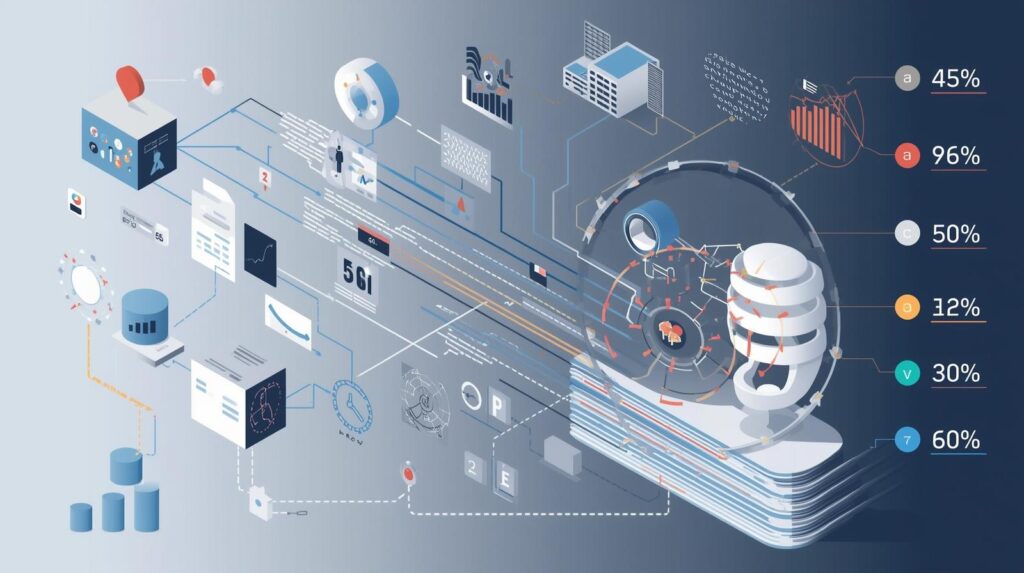
If you build an AI system without regular bias audits, it’s like launching a product without quality control: faults are sure to happen, but you won’t find out about them until they cause serious damage. Bias doesn’t always show up during development; it often shows up when a model has to deal with the unforeseen complexity of the real world.
A hiring AI might work brilliantly in tests but always turn down qualified candidates from minority groups in real life. These quiet failures go on without organised auditing, leading to prejudice in millions of judgements every day. Regular bias audits turn fairness from an idea into a standard that can be measured and held accountable. Development teams can use open-source tools like Aequitas, IBM Fairness 360, and Google’s PAIR AI Toolkit to see if a model treats all demographic groups fairly in all of its decisions.
Audits should happen all the time, not only when a model is first released, because AI models change over time as real-world data changes. When you publish audit results, it develops confidence with users and makes organisations accountable. Fairness becomes a visible, continuous commitment from the business instead of a footnote.
3. Build Diverse Development Teams
AI systems show the views of the individuals who make them. When those teams aren’t diverse, the technology itself has blind spots. No matter how smart a group of developers is, they can’t predict how an AI will effect communities they have never been a part of or fully understood.
Research regularly demonstrates that teams composed predominantly of a single demographic are significantly less likely to recognise prejudice against under-represented groups. Some people benefit from AI, while others are hurt by it. Not as a checkbox exercise, but as a core engineering strategy, building diverse development teams requires actively hiring people from all genders, races, ages, cultures, disabilities, and socioeconomic backgrounds. diverse points of view naturally bring up concerns that teams that are all the same don’t think to ask, like “How does this affect older users?” or “Does this work just as well with different accents?”
Companies like Google, Microsoft, and IBM have shown that having a mix of people on AI teams leads to products that are fairer, stronger, and more successful in the market. This powerful industry evidence confirms that diverse, inclusive teams are significantly better equipped to identify, challenge, and systematically eliminate AI Bias — catching blind spots, questioning flawed assumptions, and building technology that genuinely reflects the full diversity of the real world it serves. Not only is inclusion the right thing to do, it also gives you a competitive edge.
5. Implement Continuous Monitoring in Production
Releasing an AI model without keeping an eye on it all the time is like letting a self-driving car go without sensors — it’s unsafe, reckless, and sure to fail. This absence of continuous oversight creates the perfect conditions for unchecked AI Bias — silently corrupting thousands of automated decisions every single hour, long before any human reviewer ever notices that something has gone fundamentally and dangerously wrong. A lot of companies spend a lot of money on testing before a model goes live, but they stop watching it as soon as it does.
Real-world production environments bring in fresh data that can’t be predicted, changing user demographics, and changing social contexts that testing can’t fully reflect. Bias that was not obvious during development can unexpectedly and quietly show up in production, producing hundreds of unjust decisions every hour before anyone even detects that something is wrong. Continuous monitoring changes the deployment of AI from a one-time event to an ongoing duty.
With tools like Arize AI, Fiddler AI, and WhyLabs, organisations can keep an eye on fairness measures in real time and get automatic notifications when a model’s behaviour falls below acceptable levels for any demographic group. Monitoring should include not only accuracy but also fairness, making sure that the model works the same way for all users, not just the majority. Companies who utilise continuous monitoring in their AI operations find bias early, address it quickly, and generate user trust that lasts, which no marketing effort can provide.
6. Follow Emerging Global Regulations
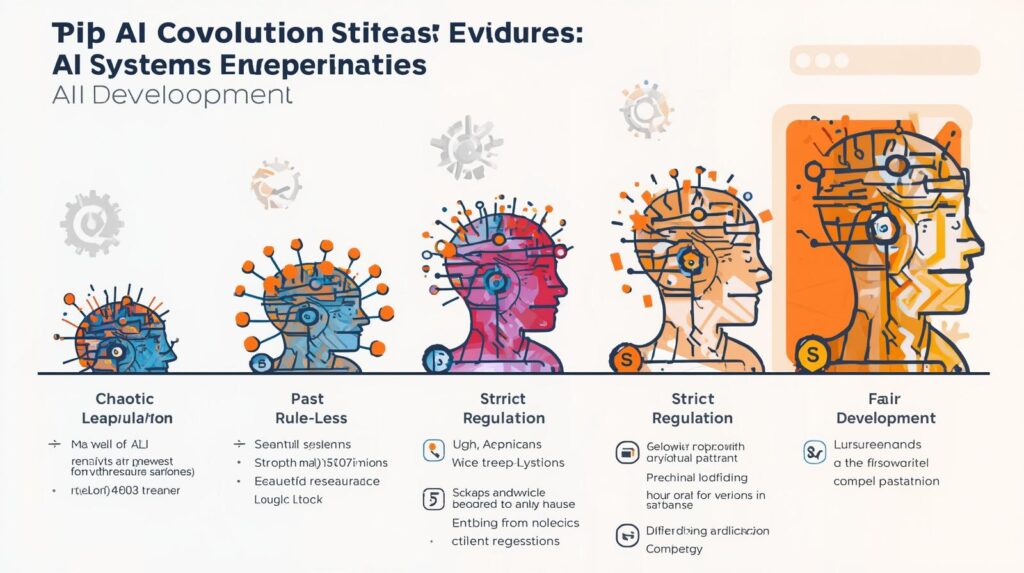
For a long time, there weren’t many rules on how to develop AI. Companies built and used powerful systems without having to worry much about bias or discrimination. That time is coming to an end quickly. Governments all over the world are realising that promises to be fair aren’t enough when algorithmic discrimination hurts a lot of people at once. Companies who don’t follow new AI rules are not only putting themselves at danger of ethical failings, but also of big legal fines, expensive lawsuits, and harm to their reputation that can permanently hurt their business and public trust.
Following new global rules before they come into effect gives you a real competitive edge when it comes to following the law. The AI Framework Act in South Korea (which goes into force in January 2026) says that all AI systems must be fair and not discriminate, especially in healthcare and public services. At the heart of these sweeping global reforms lies a deeper conversation — “The Ethics of LLMs: Navigating Bias and Responsibility in AI Language” — which explores how large language models must be held to the same rigorous fairness standards now being written into law worldwide.
Japan’s AI Basic Act says that there must be strict fairness checks and no biased training data. The AI Act of the European Union sets strong rules for holding high-risk AI systems fully accountable to the people they serve. These landmark global legislative frameworks share one common, urgent mission — to systematically detect, measure, and permanently eliminate AI Bias — holding every organisation that develops or deploys artificial intelligence to the highest possible standards of fairness, transparency, and human accountability across all industries.
AI applications accountable. Smart companies look at these frameworks not only to follow the rules, but to go above and beyond them. They do this by making AI systems that are clearly fairer, more open, and truly trustworthy in every market they serve around the world.
7. Create a Continuous Feedback Loop
Most AI systems are built to just go one way: they make judgements, but they don’t often listen back. This quiet is dangerous. People who use AI every day are often the first to see its problems, but most companies don’t have a clear way for people to report prejudice or unfair results. If there is no way to give feedback, objections about bias go ignored, patterns go unnoticed, and bad models keep running without anybody questioning them.
The people who are most hurt by biased AI are often the ones who have the least influence to make real changes in the organisations that are accountable. This painful reality makes it absolutely essential for every organisation to actively acknowledge and directly address AI Bias — treating it not as a technical inconvenience but as a serious human rights issue that demands immediate, structured, and compassionate organisational action. A feedback loop that never ends turns users from passive consumers of AI judgements into active partners in making them better. Companies should set up clear, easy-to-use reporting channels where people may report biased results.
Most importantly, they should show that those reports lead to genuine action. Feedback should go straight to cycles of improving data, retraining models, and teaching the team. Every year, companies like Google and Microsoft release **AI Fairness Reports** that show what they found and what they did to fix it. This extreme openness turns user criticism into organisational responsibility, turning justice into a living, self-improving standard instead of a promise that is never kept.
Quick Reference: 7 Ways at a Glance
# | Strategy | Key Action |
1 | Diversify Training Data | Audit datasets for representation gaps before training |
2 | Run Regular Bias Audits | Use tools like Aequitas, IBM Fairness 360, Google PAIR |
3 | Build Diverse Teams | Include varied backgrounds in AI development roles |
4 | Demand Transparency | Require explainable, non-black-box AI systems |
5 | Monitor in Production | Set automated fairness alerts post-deployment |
6 | Follow Regulations | Stay ahead of AI laws in South Korea, Japan, EU & more |
7 | Create Feedback Loops | Let users report bias; loop it back into model updates |
The Bottom Line
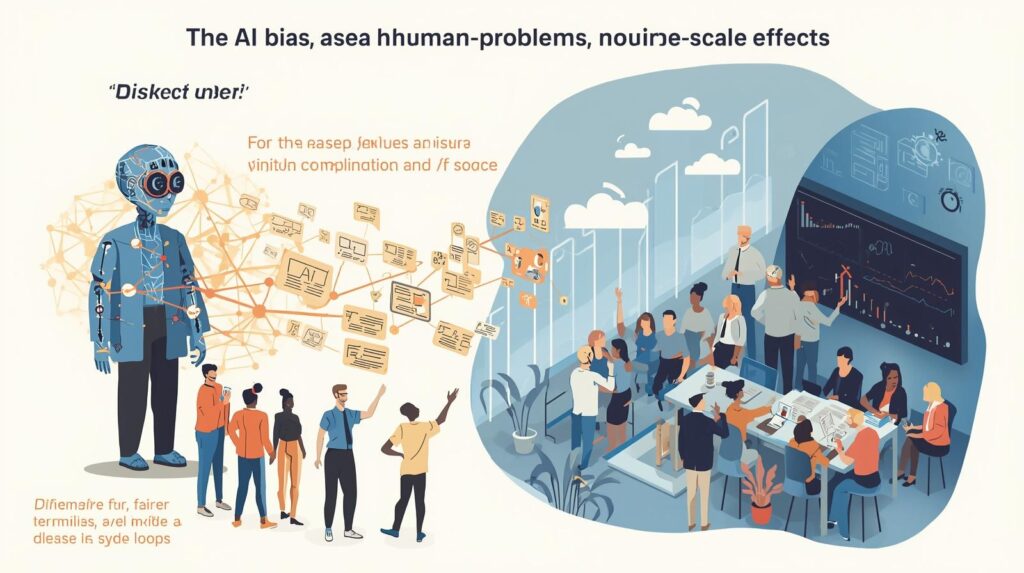
AI bias is not only a technological problem that only data scientists and engineers can solve. It is a very human problem with machine-scale effects that affect all of us. AI systems learn from data that people create, and when that data is full of years of bias, discrimination, and unfairness, the machine copies and magnifies it.
A biased AI makes the same bad choice millions of times a day, without anyone noticing, and at a speed that no human can keep up with. The encouraging truth is that AI bias is not inevitable — it is fixable. This blog lists seven proven ways to design fairer technology that you can use right away.
Running regular audits, forming diverse teams, demanding openness, keeping an eye on production, following the rules, and creating feedback loops are all part of a larger commitment, not just separate actions. Together, these interconnected strategies form the most effective and proven defense against AI Bias — ensuring that fairness is not treated as an afterthought but as a foundational principle embedded into every stage of AI development. Companies that follow these rules don’t simply make better AI; they also develop trust, make products that operate better, and make the future more fair for everyone.
People Also Ask:
"What is AI Bias and how does it affect hiring decisions?"
AI technologies quickly scan resumes, but AI Bias skews the results, automatically dismissing eligible candidates based on their race, age, or gender.
"How does AI Bias impact healthcare and patient treatment outcomes?"
Doctors use AI diagnostics every day, but AI Bias changes the recommendations for care, which means that women and minorities are consistently underserved and undertreated.
"What are the best tools available to detect and measure AI Bias?"
AI bias detection systems like IBM Fairness 360, Aequitas, and Google PAIR help teams find credible solutions and make auditing much more effective.
"How do global regulations help organizations eliminate AI Bias effectively?"
Governments all over the world now require fairness, and laws like South Korea’s AI Act and Europe’s AI legislation make sure that AI bias may be legally challenged.