Introduction

The International Maritime Organization (IMO) 2023 decarbonisation amendments heralded a permanent transition in the international ship management sector from a casual culture of passive documentation to one of high-stakes, active operational carbon tracking. At the very core of this paradigm shift in regulation is the determination of a vessel’s “Annual Efficiency Ratio Baseline.” As outlined in EEXI and CII: Guide to Shipping’s Sustainability Regulations with 2026 -2028 outlook, the “Annual Efficiency Ratio Baseline” is the fundamental yardstick by which the efficiency of the modern commercial fleet is measured. To go through this paradigm, it is necessary to understand how the raw emissions data directly impacts a vessel’s marketability and compliance.
Table of Contents
The Genesis of the 2023 Decarbonization Mandate
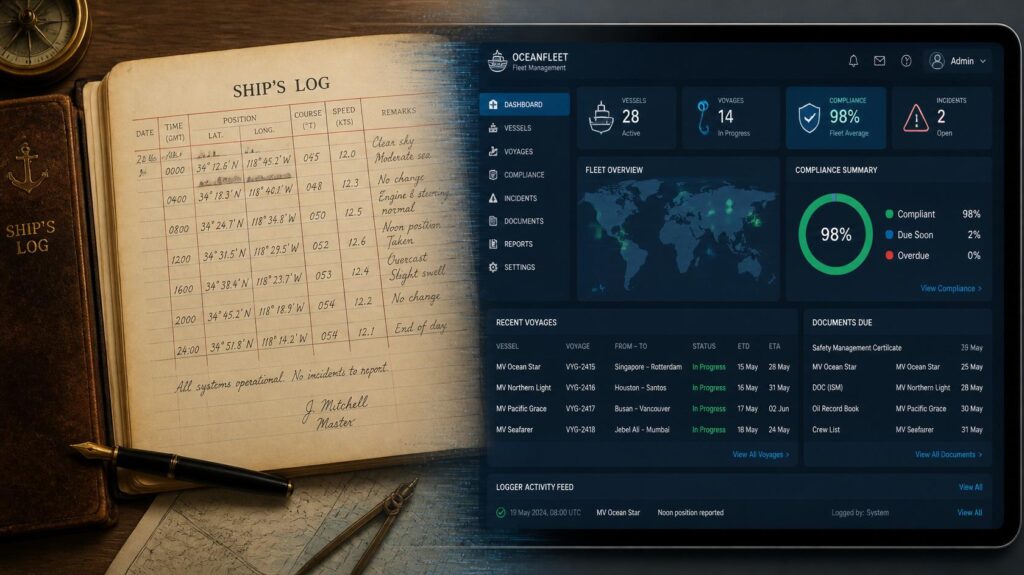
The basic operating standards for the worldwide commercial fleet have changed with global carbon intensity limits. Until then, carbon tracking was seen mostly as a corporate social responsibility statistic, not as an operational constraint that could be enforced. The IMO has created a “Annual Efficiency Ratio Baseline” for each vessel, making carbon emissions a critical commercial factor that directly affects a vessel’s capacity to trade lawfully. This first launch challenged ship owners to go beyond design efficiency and face the real world operating profiles and to develop a transparent system where every single voyage directly contributes to an annual environmental grade that cannot be faked or hidden.
Historic Shift to Active Tracking
The introduction of active operational monitoring under MARPOL Annex VI has fundamentally transformed the everyday responsibilities of technical superintendents and shipboard personnel. The implementation of the “Annual Efficiency Ratio Baseline” meant that fuel usage could no longer be aggregated at the end of a voyage in a casual manner; constant, high-fidelity monitoring was necessary to avoid catastrophic rating drift. This regulatory framework successfully pushed the maritime industry towards a more proactive strategy for voyage optimisation, making the real-time collection of fuel data a mandatory requirement for compliance and thereby establishing the foundation for a more transparent and accountable global shipping ecosystem.
The Death of Passive Documentation
The era of passive paper documentation came to an official end as flag states demanded verified digital data streams to certify annual performance. This new regime demanded absolute transparency to verify a “Annual Efficiency Ratio Baseline” and hence traditional, vaguely approximated noon reports became totally outdated for advanced carbon accounting. Ship owners soon discovered that if they failed to obtain accurate data they would suffer instant penalties for non-compliance. Automated telemetry systems that send fuel data straight from the engine room to shore-side management offices for constant auditing were thus swiftly adopted.
Decoding the Mathematical Mechanics of the 2019 Reference Lines
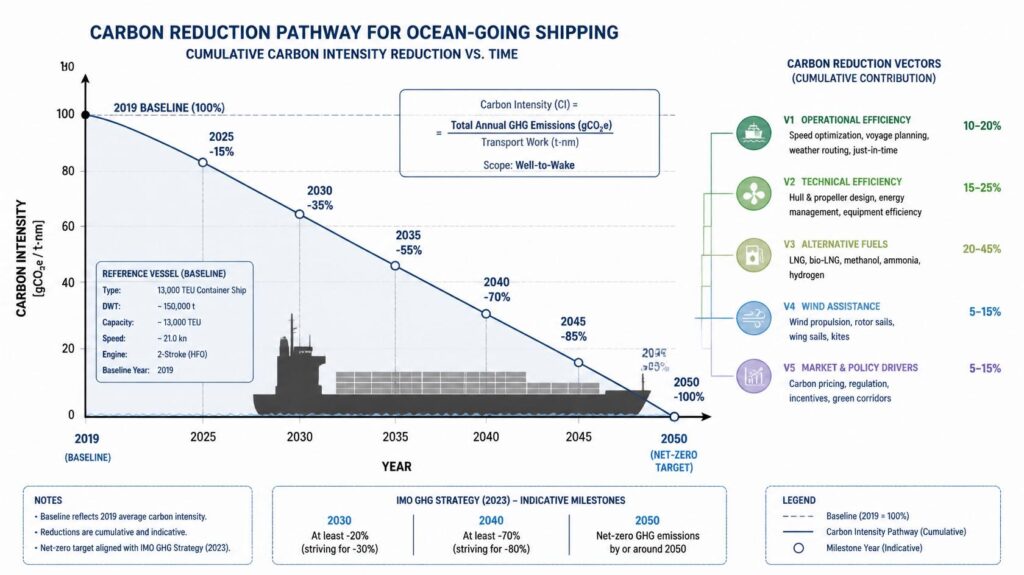
The mathematical reference framework developed by the regulatory entities should be deconstructed to understand the trajectory of modern carbon targets. The IMO used historical data collected over the period 2008-19 to develop particular lines for each kind of vessel and base the “Annual Efficiency Ratio Baseline” calculation on realistic historical performance levels. This reference structure ensures that compliance is not computed on a generic one-size-fits-all basis but is accurately calibrated to the specific deadweight and vessel type, requiring older, less efficient ships to make quick operational improvements to survive commercially.
Establishing the 2019 Performance Benchmark
The current rating structure is based on the 2019 reference lines computed from data provided to the IMO Data Collection System (DCS). This historical landmark sets the required carbon intensity for each ship type, thereby making the “Annual Efficiency Ratio Baseline” a very tailored target for the technical management teams. The IMO based the restriction on 2019 numbers, a reasonable but tough baseline that reflected the operational reality of the global merchant fleet prior to the epidemic, and prohibiting ship owners using loopholes in historical statistics.
The Mathematical Vulnerability of AER
The AER system is mathematically structured so that vessels incur substantial rating penalties for even a little decrease in operational efficiency throughout a calendar year. The Annual Efficiency Ratio Baseline is calculated as the total carbon mass divided by the design deadweight multiplied by the actual distance sailed, so any fuel used when not sailing immediately penalises the mathematical calculation. This reality makes operators aware that the methodology does not take into account differences in use of cargo. A vessel sailing in a ballast condition with no cargo, therefore, accumulates the same carbon accountability as a fully-laden vessel.
Confronting the Initial 5% Carbon Reduction Factor
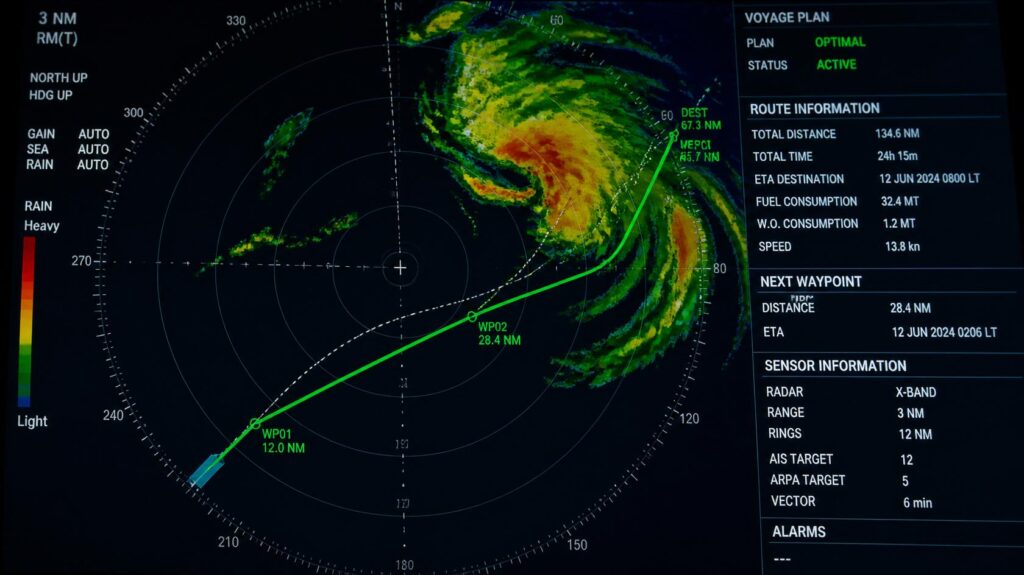
The implementation of the operating intensity was done in phases, and the first phase required a mandatory reduction factor of 5% compared to the historical reference lines. For commercial charterers, a 5% decline sounded doable at first, but this adjustment against an unoptimised “Annual Efficiency Ratio Baseline” became a considerable technical challenge for older tonnage. The reduction layer was an industry wake-up call that the typical operational measures like small slow steaming were no longer enough to ensure continual compliance in a multi-voyage annual cycle.
The Reality of the 5% Drop
The implementation of the initial 5% reduction target revealed the technological limits of many of the older vessels operating in the global spot market. Operating a fleet within this constricting “Annual Efficiency Ratio Baseline” meant that changes had to be made immediately in the way voyages were executed as customary margins for error completely disappeared under the new framework. Ships that had been sailing with sub-optimal hull conditions or worn machinery components were soon sliding into non-compliance and technical management were forced to impose stringent operational speed limits to artificially reduce daily fuel burn rates.
Beyond Simple Slow Steaming Limits
The reliance on slow steaming as the sole way to achieve the 5% reduction target was soon proven to have serious commercial and technological limits on diverse trade routes. “Operators have to make use of specialised meteorological routing software to deliberately avoid hull-stressing currents and severe head waves, so as to safely maintain the “Annual Efficiency Ratio Baseline”. This operational change revealed that it takes a holistic voyage management approach to be compliant on ratings where weather routing, draft optimisation and main engine load adjustment are all done simultaneously to get the most out of every mile.
Physical Vessel Modifications for Baseline Integrity
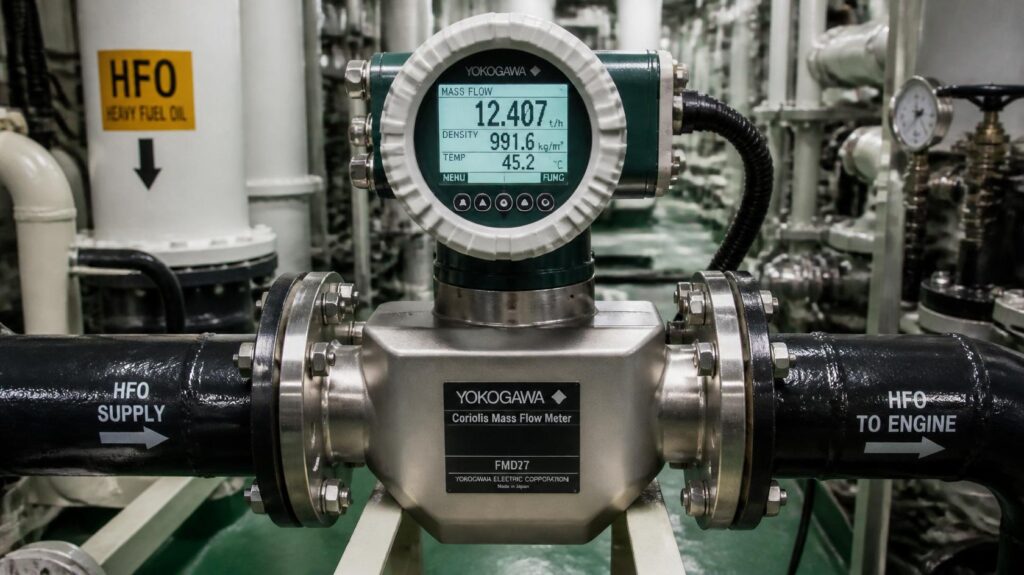
A major wave of capital spending was undertaken to achieve absolute data integrity at the source, involving physical machinery modifications across the fleet worldwide. In an effort to safeguard the “Annual Efficiency Ratio Baseline” from being corrupted by raw data, ship owners were required to abandon the manually calculated sounding tape measures. Technical management viewed automated physical retrofits as their key method to protect their vessels from artificial rating inflation caused by human error or uncalibrated analogue engine room instruments.
Upgrading Fuel Measurement Infrastructure
Installation of high precision Coriolis mass flow meters have become an absolute necessity for preserving the integrity of carbon reporting. These significant physical modifications help ensure that changes in fuel temperature and density do not alter the calculated “Annual Efficiency Ratio Baseline” data during the year. They measure mass, not volume, so there are no compounding calculation errors, which are so often an issue with manual fuel tank soundings, and an unassailable record of accurate fuel use is sent back to shore-side managers.
Integrating Digital Torque Meters
Digital torque meters were fitted directly to the primary propulsion shaft, to enable teams to distinguish between engine degradation and environmental resistance variables. It is this significant physical improvement that supplies real time power data which supports the “Annual Efficiency Ratio Baseline” by tracking actual propeller efficiency under different draft circumstances. This information allows superintendents to quickly identify if an increase in fuel consumption is caused by bad engine combustion or progressive hull fouling, enabling highly focused maintenance interventions using continuous shaft power telemetry.
The Commercial Reality of the A-to-E Rating System
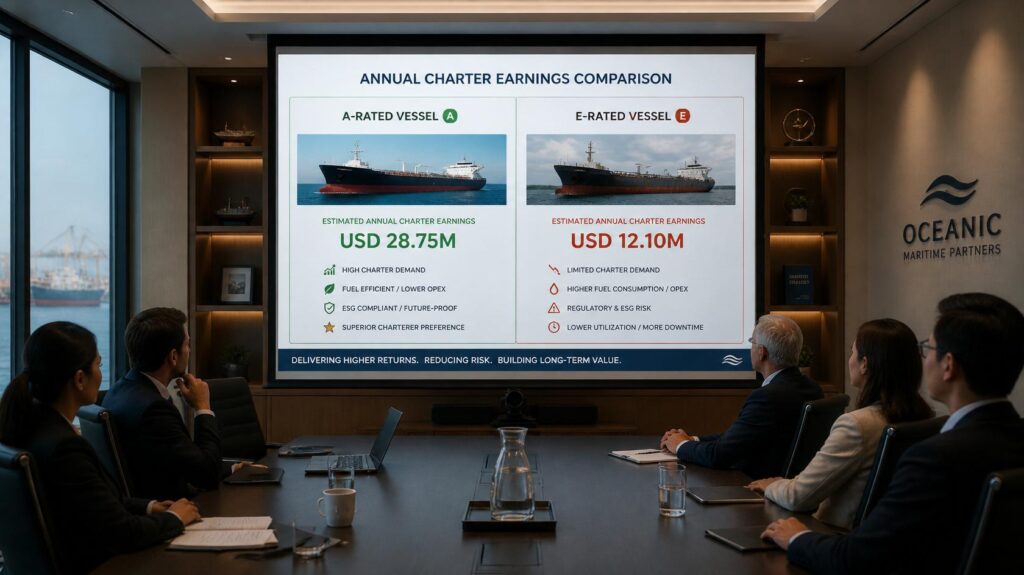
The data is collected annually and an official grading is given for the environment A-E. This letter grade has rapidly revolutionised the landscape of commercial shipping by linking the “Annual Efficiency Ratio Baseline” to the underlying charter value and marketability of the asset. The vessels that always score a D or E grade are instantly commercial isolated, since the top-tier charterers aggressively weed out inefficient ships to safeguard their own corporate scope 3 supply chain emission profiles.
Marketability of High-Performing Tonnage
This is a proven efficiency and vessels with an A or B grade command a premium in today’s time-charter market. Owners can use a strong “Annual Efficiency Ratio Baseline” to negotiate attractive charter party terms and obtain long-term employment with large global commodity dealers. This commercial distinctiveness has paid off for forward-thinking ship owners who have invested early in technical enhancements, transforming environmental compliance from an expensive regulatory burden into a distinct competitive advantage.
The Commercial Stigma of D and E Grades
In contrast, boats in the lower performance groups are subject to very substantial financial penalties in terms of diminished market demand and reduced charter prices. An asset that does not reach its mandated “Annual Efficiency Ratio Baseline” becomes a costly liability, at risk of being shut out of important trading ports and standard green finance. This financial pressure has limited cash-strapped owners to the choice of financing costly technological retrofits, or selling their lagging vessels early to secondary scrap markets.
Eliminating the Zero-Distance Anchor Penalty
A serious operational friction point created by the framework is the hefty mathematical penalty used in the case of protracted port stays and delays at anchor. Port congestion is a direct attack on the “Annual Efficiency Ratio Baseline” — because a stationary ship still burns fuel but doesn’t earn mileage. To address this systemic vulnerability, technical ship managers, port authorities and commercial chartering desks need to work closely together, to abolish the old “hurry up and wait” sailing culture.
The Compounding Toll of Port Congestion
Every hour a merchant vessel is at anchor waiting for a berth is heavily penalised in its annual cumulative compliance score. The fuel burnt by the auxiliary engine during these idle times inflates the numerator of the equation, while the numerator remains static, thus badly distorting the “Annual Efficiency Ratio Baseline”. Technical superintendents need to monitor closely this non-sailing fuel usage, as a single extended stay at a busy port might wreck a year of faultless trip optimisation.
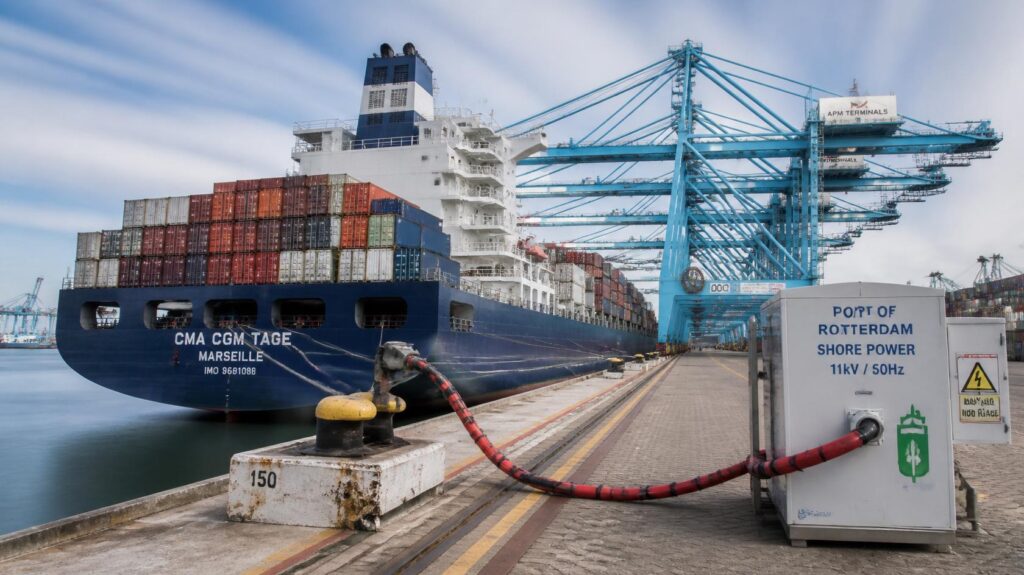
Implementing Cold Ironing Retrofits
The best physical approach to eliminating anchorage emissions is the large scale installation of high voltage shore connection devices, usually called cold ironing. This improvement allows the ship to shut down all of its auxiliary diesel generators while alongside, maintaining the “Annual Efficiency Ratio Baseline” by drawing clean electrical power from the terrestrial grid. For ships that trade regularly on defined liner routes, the ability to plug into shore power has gone from being an optional environmental upgrade to an absolute survival requirement.
Future Tightening and the Road to 2030

The regulatory structure was developed as a progressive system, in which compliance requirements automatically get more stringent each year through the end of the decade. After the initial launch phase, the necessary reduction factors are likely to increase significantly, prompting a reassessment of the “Annual Efficiency Ratio Baseline” assumptions. Ship managers must understand that the operational measures that enabled them to reach a compliance C rating last year will ultimately lead to a non-compliant D or E rating as the targets tighten towards the 2030 net-zero targets.
The Year-Over-Year Reduction Trap
The annual reduction factors are compounding and compliance is an ever-moving aim for the international maritime industry. The fixed vessel “Annual Efficiency Ratio Baseline” will be in a constant multi-percent tightening loop each calendar year leaving no space for technical or operational complacency. The architecture of this regulation means the ship owners are forced to engage in a continuing process of incremental efficiency improvements . Any break in technological investment means instant regulatory failure .
Preparing for the 2030 Checkpoint
As the industry nears the IMO 2030 checkpoint, which requires an absolute 40% reduction in carbon intensity, modest operational adjustments will be less impactful. Adopting a forward-looking strategy like Smart maritime operations: Unleashing Remarkable Growth with 7 Game‑Changing Innovations will become critical, as full scale technical adaptations, such as the introduction of drop-in biofuels and alternative dual-fuel propulsion systems will eventually need to be kept to a workable ‘Annual Efficiency Ratio Baseline’. Ship management businesses who develop these advanced retrofitting capabilities today will be the ones that effectively protect their fleets through the next decade of decarbonisation.
The Interconnection with Global Market Carbon Pricing

Today the efficiency indices cannot be seen as an independent regulatory hurdle apart from the financial markets in the worldwide fleet operations. The “Annual Efficiency Ratio Baseline” is currently a key data provider to larger global economic regional frameworks such as the European Union Emissions Trading System (EU ETS) and regional clean fuel mandates. As these financial arrangements tax ships based on their overall carbon output, a poorly optimised efficiency rating leaves ship owners exposed to significant operational tax liabilities. The integration of emissions tracking with financial planning means a vessel’s daily profit margins are closely tied to its environmental performance.
Shifting Penalties to Financial Balance Sheets
Regional carbon taxes have translated theoretical environmental calculations into tangible, non-negotiable economic costs for ship owners. Within this reality, a high competitiveness “Annual Efficiency Ratio Baseline” is a safeguard against the debilitating demand of carbon certificate buying on commercial trading voyages. Companies that do not maximise their operating profile end up suffering significant financial penalties that completely wipe out their freight profits and require a full reconciliation between corporate accounting and technical engine room management across the global maritime supply chain.
Preparing for Regional Fuel Taxation Expansion
Maritime governments are gradually creating localised green enforcement zones. Carbon efficiency tracking will become evermore fragmented and financially punishing for non-optimized vessels. Fleet operators will need to proactively build multi-regional tax compliance solutions into their voyage estimate software, before placing longterm charter fixtures, so as to defend the “Annual Efficiency Ratio Baseline”. This proactive stance avoids any catastrophic surprise of regional financial fines and ensures that the technical changes undertaken on the vessel provide verifiable financial returns as well as the desired environmental benefits.
Conclusion
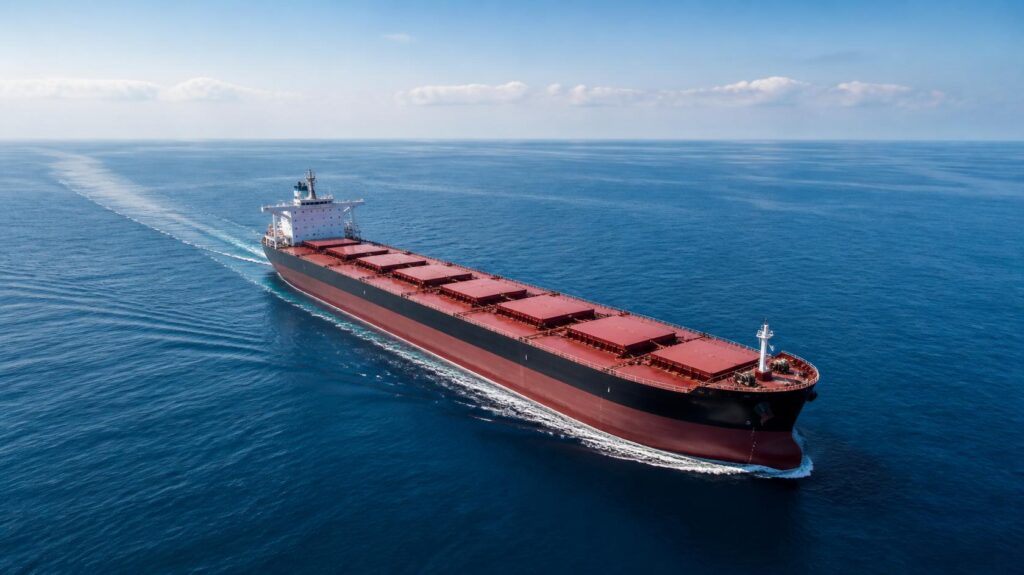
A steadfast dedication to meticulous data gathering and forward-thinking machinery optimisation is crucial for effectively manoeuvring through the contemporary maritime regulatory environment. The global “Annual Efficiency Ratio Baseline” has been introduced, permanently fusing environmental compliance with commercial viability, making carbon efficiency the financial survival of every merchant vessel. Investing in advanced fuel telemetry and hull-optimization retrofits can help forward-thinking ship managers defend their assets against rating downgrades and guarantee their position in a decarbonised future with certainty.
People Also Ask
How does deadweight tonnage directly impact a vessel's AER calculation?
Deadweight tonnage is a constant multiplier in a denominator of the equation. So, larger vessels are “naturally” more efficient than smaller vessels on the “Annual Efficiency Ratio Baseline” on a per-mile basis, since they are able to spread the fixed costs over a larger capacity.
Can alternative biofuels be utilized to immediately rescue a failing CII rating?
Yes, the introduction of certified biofuels into traditional auxiliary equipment instantly reduces the overall carbon mass numerator which is a very effective way of protecting your “Annual Efficiency Ratio Baseline” without major or prohibitively expensive structural main engine adjustments.
What happens if a vessel receives a consecutive 'D' rating for three years?
The vessel has been slapped with an obligatory regulatory penalty requiring the immediate filing of a written Corrective Action Plan under its SEEMP Part III, changing operating profiles to correct the “Annual Efficiency Ratio Baseline”.
Why does the AER index penalize vessels operating on long ballast voyages?
The index uses total design deadweight and not actual cargo carried, statistically penalising ballast cruises because auxiliary boilers and engines burn fuel while covering distance with no offsetting optimisation of transport work vs the “Annual Efficiency Ratio Baseline.”