Introduction
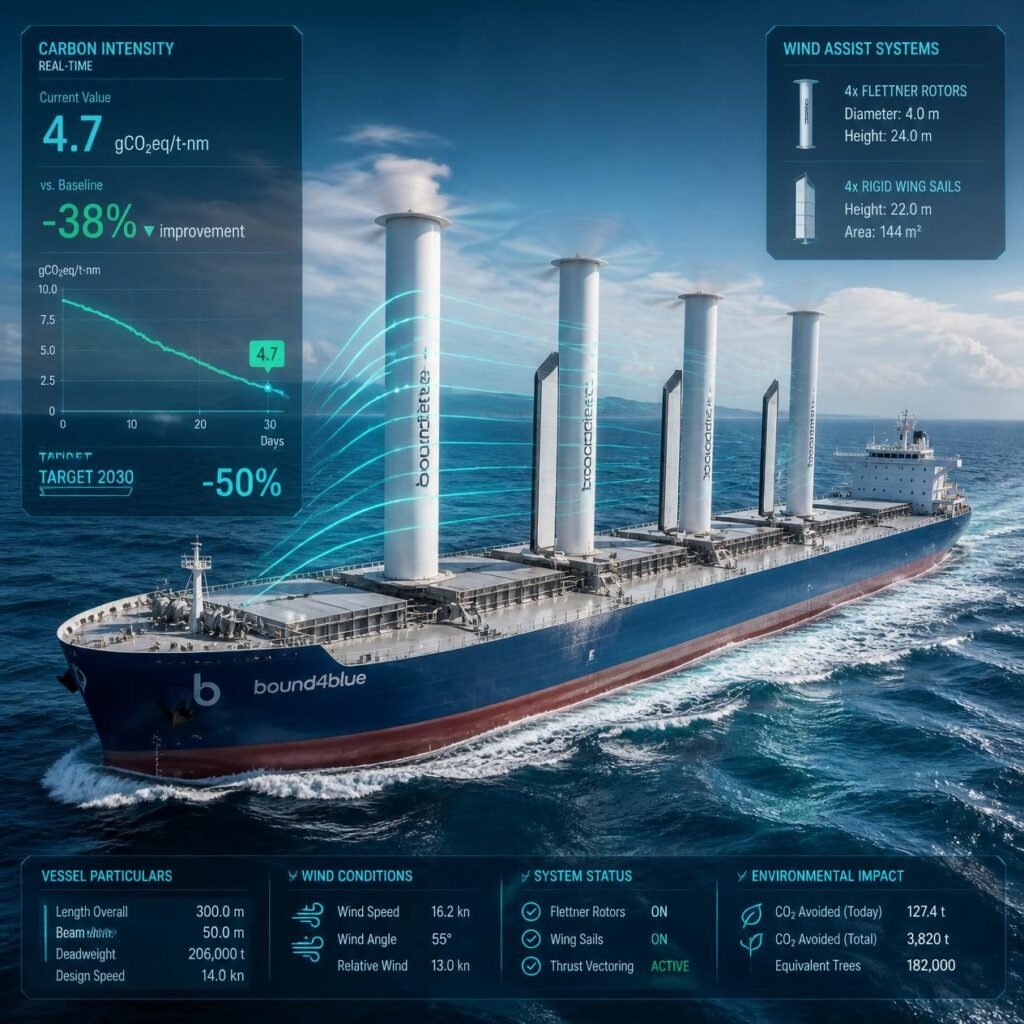
The final decarbonisation milestone for commercial shipping is the convergence of the IMO Net-Zero Framework (NZF) and operational Carbon Intensity Indicator (CII) tracking. Simple operational changes such as slow steaming will no longer suffice as global fleets strive to meet stringent life-cycle greenhouse gas fuel intensity limits. As highlighted in Wind-assisted propulsion system for shipping decarbonization: Technologies, applications and challenges, the Global Fuel Standard Horizons: Engineering the Fleet for the IMO 2030 40% Carbon Intensity Target sits right in the middle of this regulatory shift .
Full integration of wind-assisted propulsion systems (WAPS) such as Flettner rotors and rigid wing sails paired with alternative multi-fuel main engines provide ship management teams the ability to harvest free aerodynamic thrust and reduce fuel consumption. Proactive “Global Fuel Standard Horizons” initiatives optimise well-to-wake emission profiles, safeguard charter party asset value and assure absolute regulatory compliance until 2030 and beyond.
The Regulatory Architecture of the IMO 2030 Net-Zero Framework
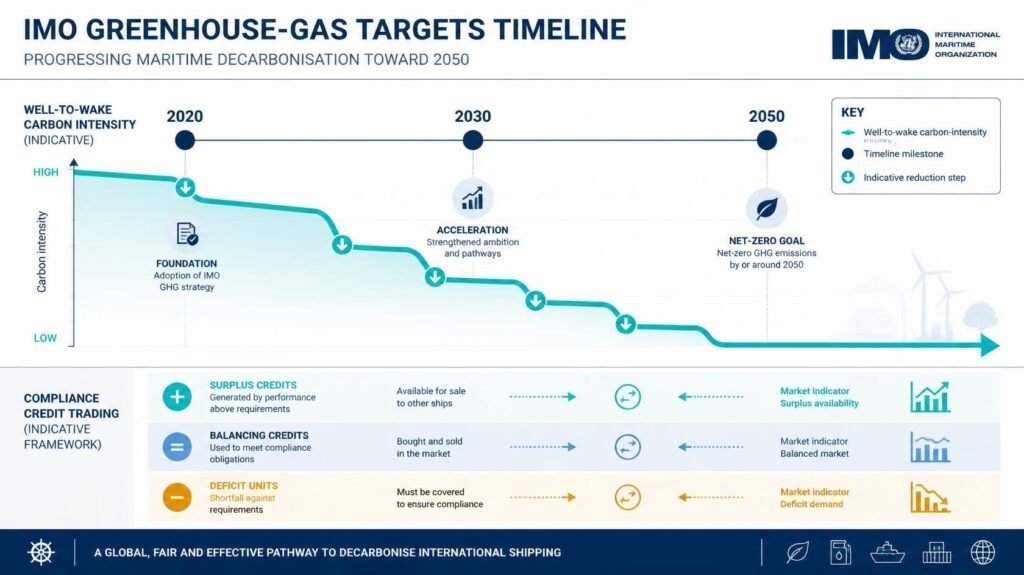
The IMO’s 2023 Greenhouse Gas Strategy included required milestones which called for a 20% to 30% cut in total absolute emissions by 2030 and an overall 40% reduction in carbon intensity compared to 2008 baselines. At the heart of this mandate is the Net-Zero Framework (NZF), which integrates a technical Well-to-Wake (WtW) GHG fuel intensity standard with an economic carbon pricing mechanism. Technical teams will need to consider emissions across the full fuel supply chain, and not only tank-to-wake combustion, to adapt fleet assets to “Global Fuel Standard Horizons”. “Global Fuel Standard Horizons” implementation guarantees vessel operational ratings stay compliant when global fuel standards tighten.
Well-to-Wake Accounting and Fuel Intensity Thresholds
Traditional maritime rules only considered environmental impact at the ship’s funnel and ignored upstream emissions that occurred during fuel manufacture and transportation. The Net-Zero Framework moves accountability to a full Well-to-Wake approach, imposing significant carbon fines on fossil fuels with filthy production footprints. Technical departments must use certified low-carbon alternative fuels for fleet management techniques in line with the “Global Fuel Standard Horizons”. “Global Fuel Standard Horizons” with well-to-wake lifecycle tracking prevents shipowners from unforeseen upstream carbon liabilities and compliance unit penalties.
Compliance Credits and Economic Pricing Mechanisms
Under the Net-Zero Framework, vessels operating within base GHG fuel intensity restrictions receive transferable compliance units, whereas vessels exceeding these limits are required to make mandatory financial contributions. This economic process has a direct impact on the daily time-charter rates, punishing wasteful ships and rewarding clean tonnage. By linking asset renovations to “Global Fuel Standard Horizons,” environmental compliance becomes a tangible operational cash stream. “Global Fuel Standard Horizons” carbon credit systems provide asset liquidity and boost market competitiveness on global trade routes.
Wind-Assisted Propulsion Systems: Harnessing Aerodynamic Thrust
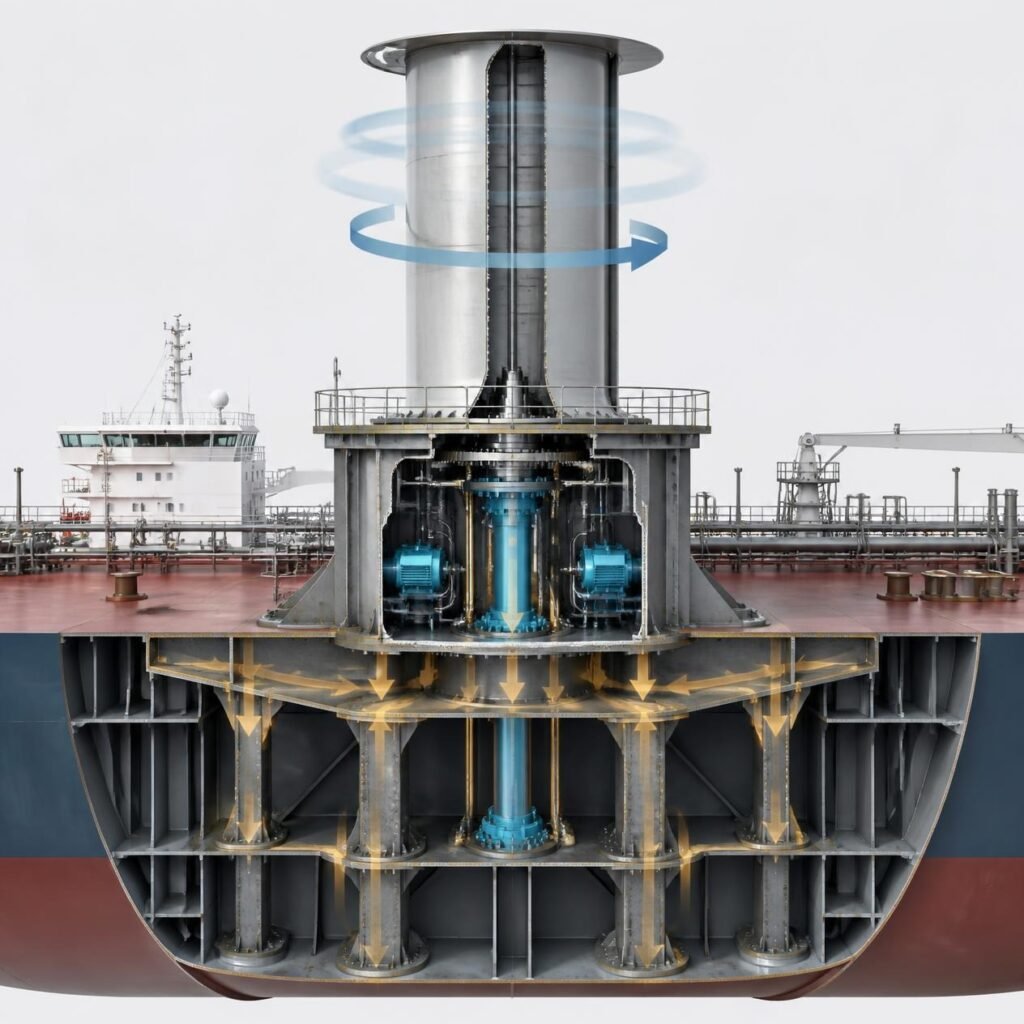
Wind-assisted propulsion is the most efficient non-combustion technology available to achieve immediate multi-megawatt fuel energy savings on commercial deep-sea boats. Technology solutions such as vertical Flettner rotors (Magnus effect) and automated rigid wing sails directly provide forward push by harvesting clean ocean wind energy. The auxiliary thrust reduces the stress on the main propulsion engine and the fuel consumption savings range from 8% to 25% depending on trading routes. “Global Fuel Standard Horizons” seeks to incorporate aerodynamic techniques to eliminate dependence on expensive alternative fuels while maintaining commercial sailing speeds.
The Physics of Flettner Rotors and the Magnus Effect
Flettner rotors are smooth, motorised, vertical cylinders positioned on the weather deck of a ship. As the wind blows over the spinning cylinder, it creates a differential pressure field, known as the Magnus effect, which produces a strong lateral thrust perpendicular to the wind direction. “Global Fuel Standard Horizons” uses automated control algorithms that dynamically modify rotor rotation speed to optimise forward thrust vectors. Magnus-effect technology encapsulated in “Global Fuel Standard Horizons” provides dependable supplemental propulsion power without consuming more fuel.
Rigid Wing Sails and Automated Tilt-Down Mechanics
Rigid wing sails use articulated aerodynamic aerofoil sections, similar to aircraft wings, to achieve high lift-to-drag ratios from crosswinds. Today’s installations are equipped with automated hydraulic trimming systems that set the angle of attack in real time for optimal performance and tilt-down systems for port cargo operations and air-draft clearance. In the “Global Fuel Standard Horizons” frameworks, wing sail technology integration maximises wind energy capture on open-ocean routes. In the framework of the “Global Fuel Standard Horizons”, automated wing systems are deployed to provide safe vessel manoeuvring and unimpeded port operations.
Structural Integration, Deck Loads, and Foundation Reinforcements
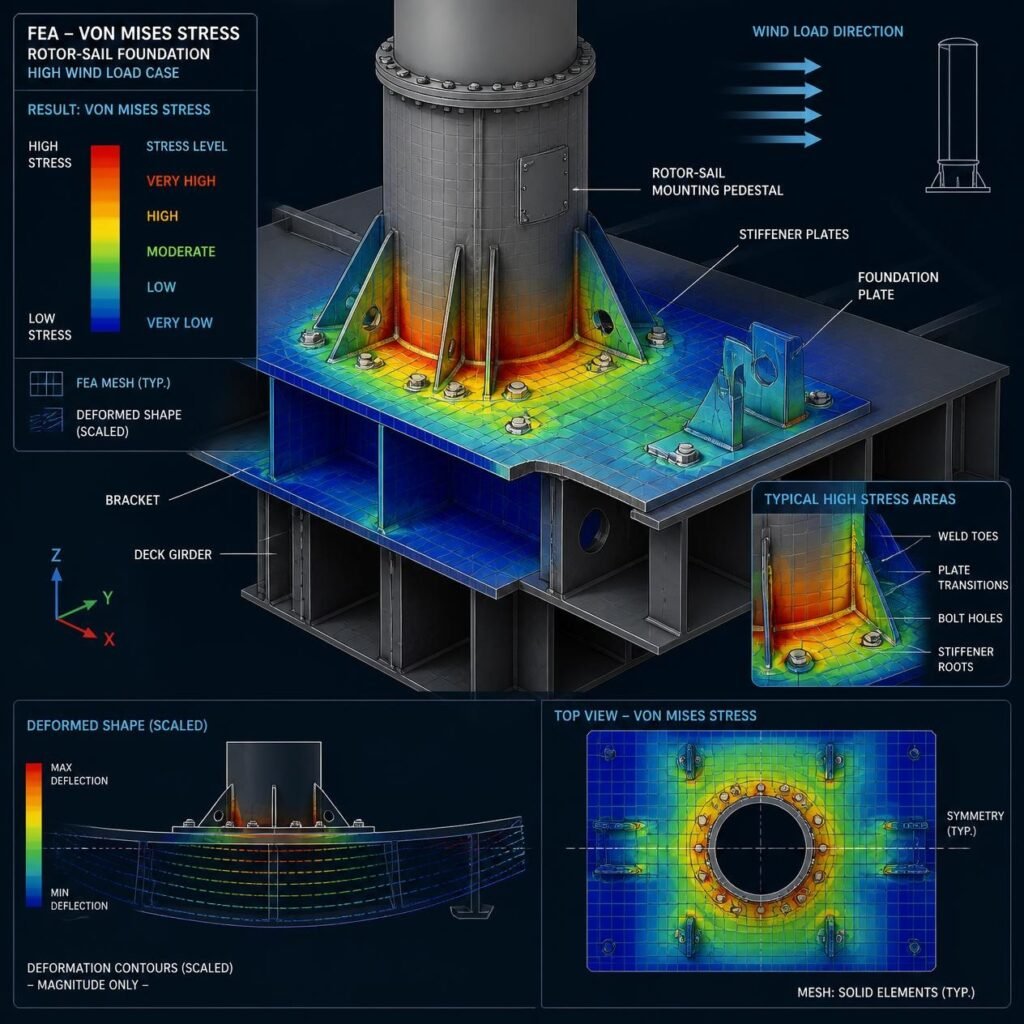
Large wind assisted propulsion systems retrofitted to existing vessel hulls require considerable structural engineering and finite element analysis (FEA) to accommodate severe dynamic bending forces. In heavy sea conditions, rotor sails and rigid wings transfer significant overturning forces straight into the ship’s deck structure and hull girders. Naval architects must construct substantial foundation pedestals, internal web frame stiffeners and deck plate reinforcements to withstand these localised structural loads. “Global Fuel Standard Horizons” means hulls are built to withstand adverse weather conditions with extensive structural retrofits.
Deck Foundation Reinforcement and Bending Moment Analysis
The concentrated point loads at the bottom of a 30-meter rotor sail or wing foundation can surpass several hundred kilonewtons during heavy wind gusts. Structural engineers must weld large internal stiffening rings and longitudinal deck girders just beneath mounting sites to safely distribute forces into transverse bulkheads. “Global Fuel Standard Horizons” engineering procedures with advance FEA modelling can prevent fatigue and deck plate breaking. “Global Fuel Standard Horizons” deck strengthening maintains primary hull strength and protects classification society structural certifications.
Intact Stability, Heeling Moments, and Visibility Rules
The installation of tall wind propulsion units changes the windage area of a vessel and adds additional heeling moments that impact damage stability margins and GM curves. Furthermore, the deck-mounted structures must comply with tight SOLAS navigation bridge sightline rules to ensure a clear forward and blind sector view. In “Global Fuel Standard Horizons” retrofits, stability calculations are balanced to provide safe vessel sea-keeping performance. “Global Fuel Standard Horizons” compliance with severe naval design requirements to preserve crew safety and to ensure free operational manoeuvrability across foreign ports.
Multi-Fuel Main Engine Configurations and Cybernetic Energy Management
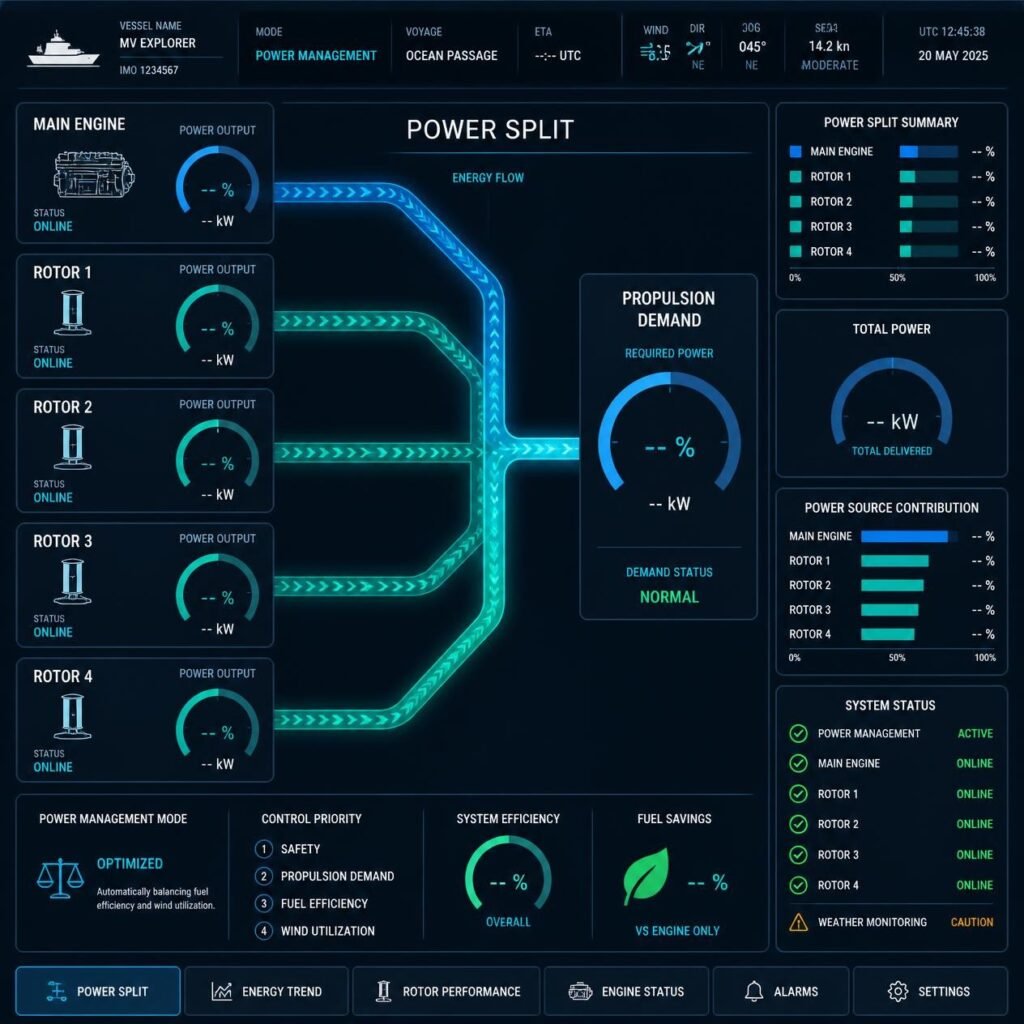
The lofty carbon intensity targets for 2030 need the combination of physical wind-assist devices with highly efficient, multi-fuel main engine architectures. Modern electronically controlled engines have to be able to work on low carbon blends of bio-methanol, e-diesel or synthetic petrol. They have to be able to dynamically modify fuel injection time so that they can react to wind thrust assistance. Cybernetic Energy Management Systems (EMS) are centralised and optimise the total power production . The EMS automatically derates the engine output when the wind conditions result in excess thrust . Global Fuel Standard Horizons uses digital power management to improve the overall efficiency of the propulsion plant.
Automated Engine Load Derating and Fuel Savings
When Flettner rotors or wing sails are producing substantial forward thrust, the ship’s automatic propulsion control system detects a decrease in the propeller torque demand. The engine control unit automatically adjusts the fuel injection mass flow to maintain the target vessel speed, while reducing the main engine fuel burn. “Global Fuel Standard Horizons” incorporates automated load-sharing algorithms that transfer wind thrust into demonstrable fuel cost savings. “Global Fuel Standard Horizons” applies sophisticated engine derating to optimise combustion characteristics and avoid wasteful fuel burn.
Weather Routing and Dynamic Wind Optimization
To optimise wind-assisted propulsion, real-time weather routing software is required to analyse worldwide satellite wind forecasts to determine the best journey corridors. Ships can maximise aerodynamic thrust and not greatly increase journey distance by slightly changing transit directions to more favourable wind angles. Utilising weather routing algorithms as part of “Global Fuel Standard Horizons” operations boosts total annual fuel savings. Dynamic routing under “Global Fuel Standard Horizons” enables predictable arrival times and optimises the use of wind energy on each marine voyage.
Life-Cycle Carbon Accounting and Charter Party Valuations
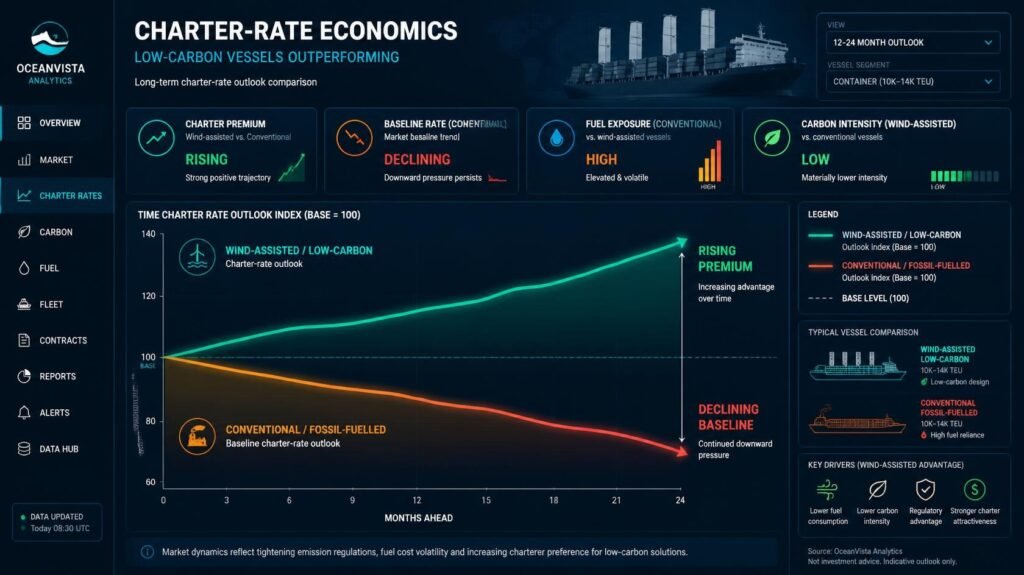
The IMO Net-Zero Framework substantially modifies the valuation of commercial vessels, since a ship’s Well-to-Wake carbon intensity becomes a significant consideration in charter party discussions. Global charterers’ scope 3 corporate reporting criteria are aggressively screening fleet assets on the basis of certified carbon efficiency, commanding premium daily fees for clean tonnage. Ships that are equipped with wind assistance and multi-fuel engines—often made possible through Alternative Fuel Retrofitting: Evaluating the Engineering Viability of Dual-Fuel Conversions for Mid-Life Vessels—can maintain higher CII ratings, avoiding penalties for non-compliance and commercial marginalisation. The “Global Fuel Standard Horizons” priority maintains the long-term charter party revenue and asset resale value.
Protecting CII Ratings and Avoiding Operational Downgrades
Ships failing to reach the annual carbon intensity reduction targets face successive downgrades in their CII, with ‘D’ or ‘E’ ratings requiring mandatory corrective action plans. Wind-assisted propulsion installation provides an operational buffer to compensate for fuel quality changes and severe weather delays. The Global Fuel Standard Horizons plan achieves the highest operational grades of ‘A’ or ‘B’ with wind technology included. “Global Fuel Standard Horizons” provides environmental ratings and unrestricted commercial trading access in restricted worldwide ports.
Maximizing Asset Liquidity and Financing Terms
Global maritime banks who adhere to the Poseidon Principles are assessing their loan portfolios to ensure alignment with IMO decarbonisation pathways. Ships with best-in-class carbon intensity performance also are rewarded with preferential loan rates and longer loan periods. Fleet upgrading capex aligned with “Global Fuel Standard Horizons” increases access for vessels to green financial instruments. “Global Fuel Standard Horizons” allows for long term compliance and improves asset liquidity in secondary sale markets to safeguard shipowner capital investments.
Capital Expenditure, Installation Logistics, and Payback Analysis
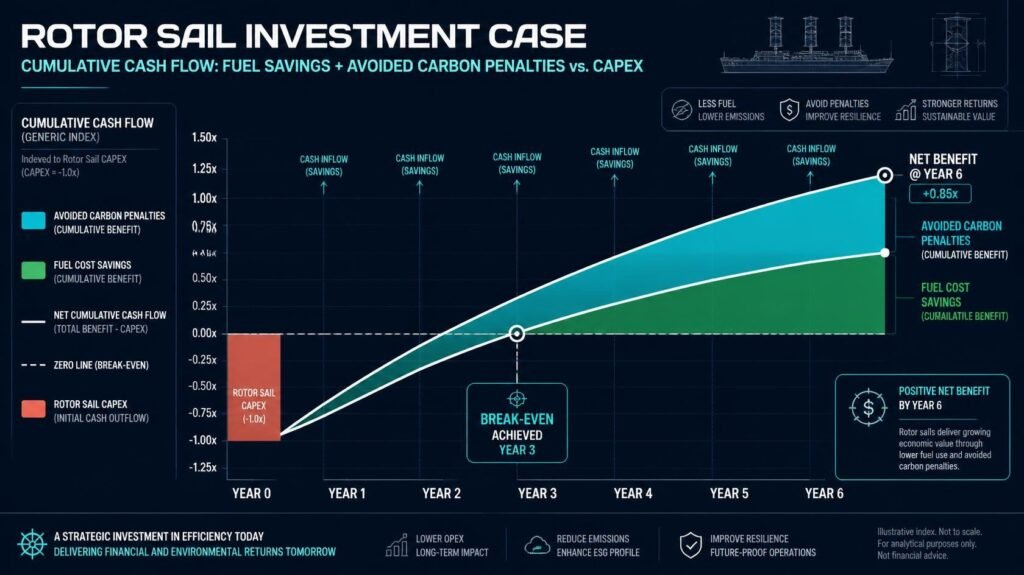
The initial capital cost of wind-assisted propulsion systems and retrofitting dual-fuel engines is significant, with multi-rotor installations costing between $1.5 million and $3.5 million. But relative to increasing carbon taxes, Net-Zero Framework compliance credit purchases, and high alternative fuel prices, financial payback periods are much shortened. According to a comprehensive financial model, adding wind energy results in immediate operational expenditure reductions. The “Global Fuel Standard Horizons” initiatives are strategically run on a 4-6 year horizon, delivering a strong ROI.
Evaluating Capital Costs and Retrofit Turnaround Times
During wind propulsion retrofits, turnaround time during the dry-docking is important to minimise lost charter hire. Naval architects complete rotor sail installations in 10 to 14 dry-dock days using prefabricated foundation pedestals and modular electrical wiring harnesses. “Global Fuel Standard Horizons” planning must consider shipyard logistics to reduce off-hire time and installation expenses. Simplified installation schedules speed asset return-to-service and daily revenue collection under “Global Fuel Standard Horizons.”
Offsetting Alternative Fuel Price Premiums via Wind Energy
Zero-carbon e-fuels, such as green methanol or ammonia, are expected to cost two to three times more per gigajoule of energy than conventional marine fuels. The capture of free wind power from the ocean to cover 15% to 20% of propulsion energy needs means a substantial reduction in total alternative fuel purchasing volumes for shipowners. Global Fuel Standard Horizons” Wind Harvesting Mitigates High Costs of Alternative Fuel. “Global Fuel Standard Horizons” reduces the demand to carry the mass of fuel, insulating fleet operators from the vicissitudes of the future alternative fuel market.
Crew Competence, Safety Systems, and Operational Governance
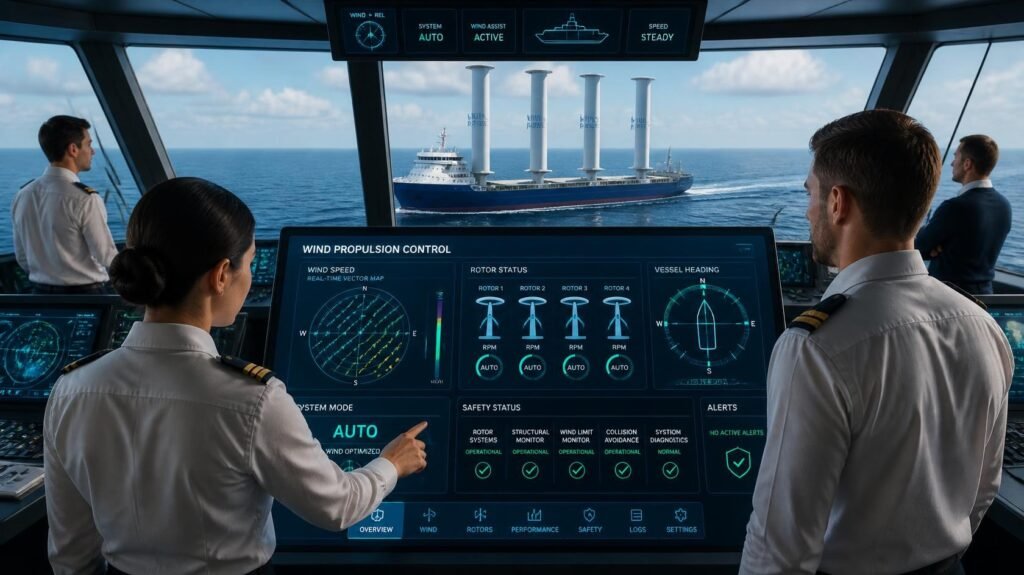
The operation of sophisticated wind-assisted propulsion systems and multi-fuel engines brings new operating procedures, safety issues and crew training needs. Seafarers need training in automated rotor operation, emergency tilt mechanics, high wind shutdown protocols, and optical blind spot control. The Safety Management Systems (SMS) on board are being updated to ensure safe operations in inclement weather and during cargo operations in port. Crew training models incorporated in “Global Fuel Standard Horizons” improve operational resilience and reduce human error. “Global Fuel Standard Horizons” will help maintain safe and efficient maritime operations across our worldwide fleet.”
Updating Onboard Safety Management Systems and Maintenance Protocols
Wind propulsion systems are equipped with high speed mechanical bearings, hydraulic actuators and automated emergency braking systems that require planned preventative maintenance. Structural bolts need to be torqued. Bearings need to be lubricated. Vibration analysis needs to be done. Aerodynamic surfaces need cleaning. The \”Global Fuel Standard Horizons\” operational rules embed maintenance routines to avoid mechanical problems at sea. Under “Global Fuel Standard Horizons” comprehensive safety management prolongs the service life of components and guarantees crew wellness.
Building Operational Resilience for 2030 and Beyond
As marine shipping evolves toward full decarbonisation, ship operators that employ innovative wind propulsion and multi-fuel technology today will be leading the worldwide market. Establishing a company culture that is dedicated to energy efficiency, digital telemetry and responsibility for the environment will guarantee long-term financial success. “Global Fuel Standard Horizons” takes the lead in a more heavily regulated business, ensuring a clear competitive advantage. Continued investment in “Global Fuel Standard Horizons” is essential for sustained fleet development and long-term asset profitability.
Synergistic Retrofitting: Combining Wind Power with Engine Precision
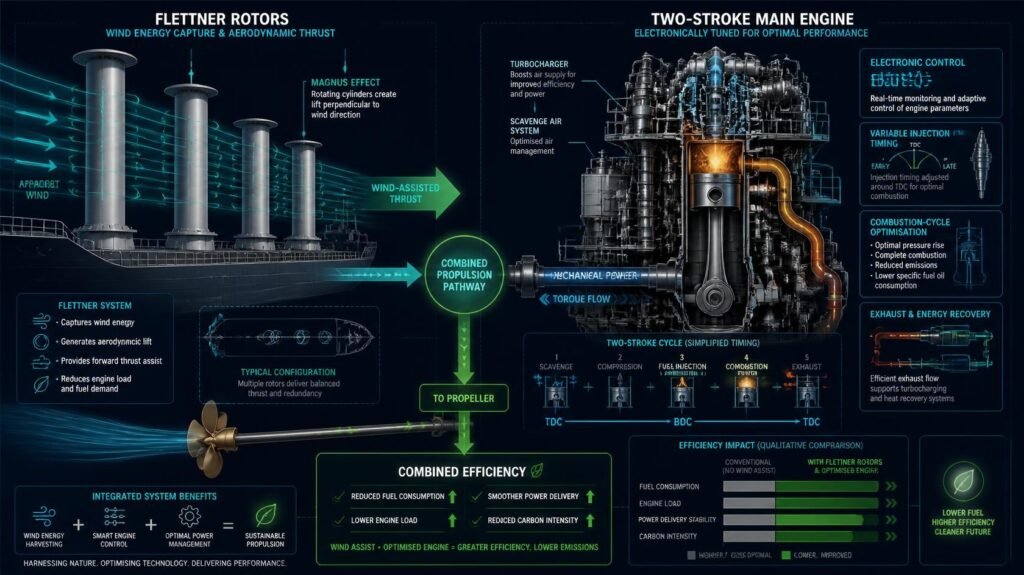
To achieve the highest thermodynamic and aerodynamic efficiency, wind assisted propulsion must be combined with accurate updates of the main engine control. Flettner rotors lower the engine loads and the main engine runs on off-design partial power curves that are not efficient for typical injection profiles. Advanced VIT (variable injection timing) and proportional valve calibration are employed to maintain optimised cylinder firing pressures during wind aided load changes. “Global Fuel Standard Horizons” combines aerodynamic improvements with precision engine tune to maximise compound fuel savings and reduce total carbon emissions.
Optimizing Part-Load Combustion During Wind Assistance
With considerable wind assistance the main engines may be run on a reduced load. This may cause lower scavenging air pressures and incomplete combustion if the injection timing is held static. To compensate, electronic control systems advance injection angles and alter hydraulic cylinder unit time to maintain peak mean effective pressure. Strategies using dynamic engine tuning within the “Global Fuel Standard Horizons” do not suffer from engine carbon fouling during wind-assisted sailing. Part-load optimisation in “Global Fuel Standard Horizons” ensures clean combustion and optimal thermal efficiency.
Compound Decarbonization and Fleet Standardization
Combining several technical interventions – wind rotor sails, hull air lubrication, variable injection time and alternative fuels – results in a powerful compound decarbonisation impact. Fleet managers that standardise these integrated retrofits across entire classes of vessels maximise operational savings of scale. Holistic engineering methods applied to ‘Global Fuel Standard Horizons’ turn regular ships into leading-edge eco-ships. “Global Fuel Standard Horizons” commitment to compound retrofits ensures full regulatory compliance and leadership in the industry from 2030 onwards.
Conclusion
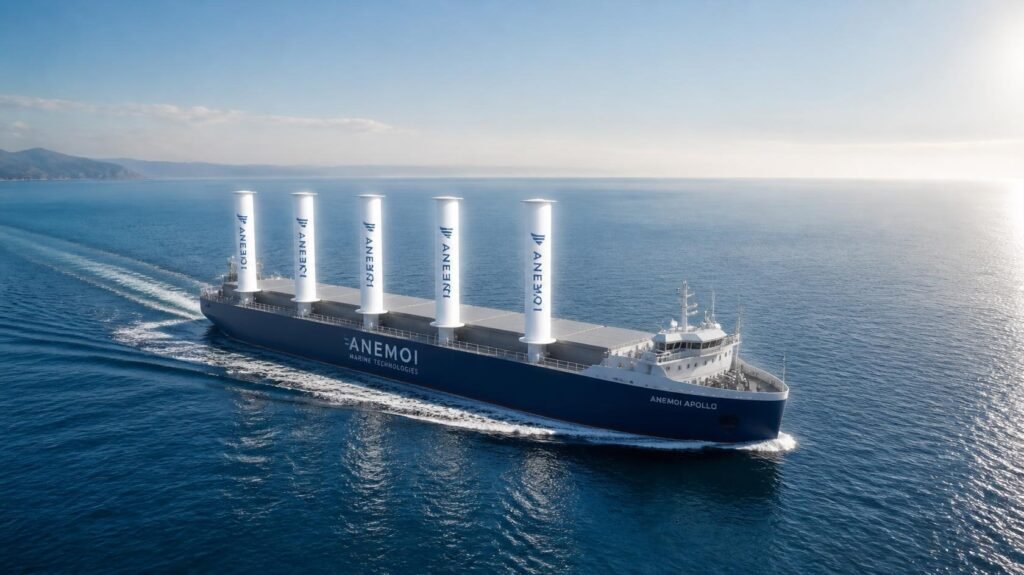
The significant regulatory obligations of the IMO 2030 40% carbon intensity target will require bold technical leadership and full asset optimisation. Based on traditional fossil fuels or minor operational changes, commercial rating downgrades and heavy carbon tax liabilities are guarantyd under the Net-Zero Framework. The proven, extremely effective engineering answer is to add wind-assisted rotor sails or stiff wings to multi-fuel main engine systems. “Global Fuel Standard Horizons” – on immediate fuel cost reductions, unlocking operational CII ratings, and ensuring commercial leadership in the zero emission shipping age.
People Also Ask
How do Global Fuel Standard Horizons targets help ships meet the IMO 2030 mandate?
The “Global Fuel Standard Horizons” methods will cut fuel use through wind-assisted propulsion and multi-fuel engines, and reduce well-to-wake emissions to meet the 40% carbon intensity reduction goal.
What fuel savings can Flettner rotors deliver under Global Fuel Standard Horizons?
Installation of Flettner rotors as part of the “Global Fuel Standard Horizons” results in 8% to 25% main engine fuel savings, depending on vessel size, trade route and prevailing wind conditions.
How does the Net-Zero Framework impact Global Fuel Standard Horizons planning?
The Net-Zero Framework includes GHG fuel intensity restrictions from well-to-wake and compliance credit pricing. “Global Fuel Standard Horizons” aligns asset upgrades to avoid carbon penalties and earn compliance credits.
Why are structural deck reinforcements needed in Global Fuel Standard Horizons wind retrofits?
Wind propulsion devices generate large overturning bending moments. “Global Fuel Standard Horizons” includes strong deck pedestals and internal girder stiffeners to maintain hull structural integrity.