Introduction:
One of the most fascinating periods in human history is right now. Machines are becoming faster, more intelligent, and more creative every day. You’ve undoubtedly heard phrases like “ChatGPT,” “AI-generated images,” or “robots taking jobs” all over the place, including on social media, in the news, and at the dinner table. What does it all imply, though? “Generative AI Demystified” aims to accomplish just that—cut through the clutter, eschew the jargon, and provide an honest, straightforward explanation of artificial intelligence.
This blog is the first in a ten-part series that will take you from having no knowledge of AI to being an expert in it. And we’re just getting started. AI: What is it? From where did it originate? Why is it being discussed so much? Above all, why is it important to you?One by one, “Generative AI Demystified” provides answers to all of these queries.
Table of Contents
What Is Artificial Intelligence, Really?
At its core Artificial Intelligence is the training of a machine to think and learn and make judgements much like a human brain. There is no magic. This is not science fiction. It’s maths, data and incredibly good programming working together.What is Generative AI? An AI Explains “Generative AI Demystified” breaks this down so that anyone, regardless of background, can understand what AI is, where it dwells and how it silently drives things we use every day — from Netflix recommendations to Google Maps routes.
The Basic Definition of AI
In short, Artificial Intelligence is the science of making machines intelligent. That’s AI. You ask your phone something and it answers. You’re listening to AI, when Spotify picks a song you’ve never heard but adore anyhow. It’s a computer software that has been educated on massive amounts of data, so it can identify trends, make predictions, and respond intelligently. “Generative AI Demystified” wants you to understand that AI is not one single thing. It is a wide family of technologies, all striving towards the same goal: making machines act more human. The word ” artificial ” only signifies it ‘s man manufactured intellect , not born naturally . And it gets better every single day.
Narrow AI vs General AI
Most of the AI you run into today is what researchers call “Narrow AI” – meaning it’s really good at doing one specific task. A chess-playing AI can beat any human player on earth, but it cannot make you a cup of tea. A spam filter can filter out nasty emails but it can’t produce poetry “Generative AI Demystified ” helps you understand the larger picture: scientists are also working on “General AI,” a system that can perform anything a person can do. Not yet, but every advance brings us closer. Understanding this distinction is the first step to accurately understand the overall AI environment.
A Quick History — How Did AI Come to Life?
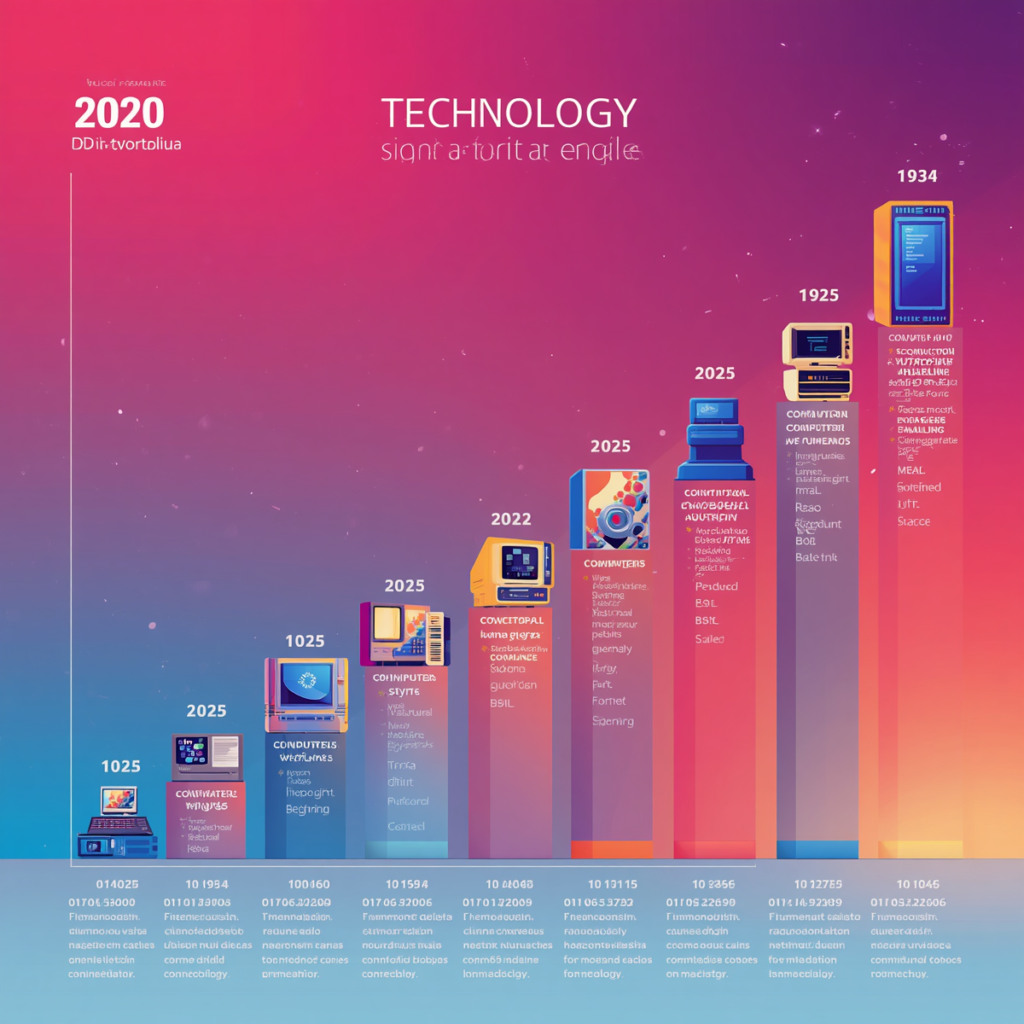
AI didn’t just spring up overnight. Surprisingly it dates back to the 1950s and has a lengthy and fascinating history. Great brains like Alan Turing asked the question first: “Can machines think?” And that one question launched a revolution that took decades to come to maturity. Generative AI Demystified takes you through the main milestones that have led to AI as we know it – from early rule-based programs to the strong language models composing essays, generating graphics, and coding software in 2025.
The Birth of AI (1950s–1990s)
The genesis of AI begins with a man named Alan Turing in 1950 who created the renowned “Turing Test” — a means to test if a machine could think like a human. In the following decades, researchers constructed early AI programs that could play chess and solve simple puzzles. But these systems were fragile – they only worked under very rigid rules. In “Generative AI Demystified,” this period is referred to as the “seed planting” phase. Progress was slow, funding dried up in what researchers nicknamed “AI Winters,” but the dream never died. These early pioneers gave us the foundation of all advanced AI systems today. None of this exists without them.
The Deep Learning Revolution (2010s–Today)
Then, around 2012, everything changed, when researchers discovered that deep neural networks – systems inspired by the human brain – could learn from raw data at an incredible scale. Suddenly machines could recognise faces, comprehend speech and translate languages. And then came transformer models, and the world received things like ChatGPT, DALL-E, Claude, Gemini and more. “Generative AI Demystified” is the moment when AI stepped out of the lab and became a genuine force. The flood of data from the internet and powerful graphics chips (GPUs) were the fuel AI needed to grow. The 2020s are the age of AI, and it’s only getting started.
What Is "Generative AI" and Why Is It Different?
You’ve probably seen the term “Generative AI” everywhere recently. But what makes it different from other kinds of AI? Regular AI can forecast, sort, or suggest. Generative AI, on the other hand, is capable of creation, meaning it creates brand-new stuff such as text, photos, music, video, and even computer code. That’s the notion around which “Generative AI Demystified” is developed because generative AI is the biggest shift happening in technology right now. Seeing it as not optional any longer is crucial for anyone who wants to remain relevant in today’s environment.
How Generative AI Creates New Content
In effect, generative AI learns the patterns in vast oceans of existing information – millions of books, articles, photographs, songs and websites. Once it has learned those patterns in depth, it can create something entirely new that looks and feels like it was developed by a person. When you tell ChatGPT to create an email, it doesn’t take it from anywhere, it makes new words depending on what it learned. That’s why “Generative AI Demystified” is so important, because it transforms everything about how we think about creativity and authorship. The machines no longer merely calculate. They compose, paint and tell stories. That is a real historic change in what technology can do.
Real-World Examples of Generative AI in Action
You don’t have to go far to see Generative AI in your daily life. ChatGPT writes your emails and answers your queries. Midjourney and DALL-E turn your words into beautiful imagery. GitHub Copilot writes code with programmers. Sora creates realistic videos from a single text prompt. “Generative AI Demystified” is designed to help you see they are not futuristic tools – they are available today, and millions of people use them every single day. They’re used in marketing by businesses, in reading scans by doctors, in making lesson plans by instructors. Generative AI is not a trend anymore. It’s become infrastructure: as ubiquitous and crucial as electricity or the internet.
Why Is AI Reshaping Every Industry?

AI’s not a tech thing anymore. It is affecting every single industry, healthcare, education, banking, entertainment, agriculture, law and more. The speed of change is astonishing. “Generative AI Demystified” is here to help you see that this isn’t about replacing humans – it’s about magnifying what humans can do. AI can do the repetitive, the difficult and the time-consuming – freeing people up to pursue the creative, emotional and strategic work that only humans can really do well.
AI in Healthcare and Education
In healthcare, AI can read medical scans faster and more correctly than most human doctors. It is helping researchers uncover novel medications in months, not decades. In education, AI tutors can adjust classes based on the learning styles of individual students. We are done with the one-size-fits-all classroom. “Generative AI Demystified” names these two industries as the most intriguing early examples of AI doing actual, life-changing good. Students in rural areas who don’t have access to quality teachers now have access to AI-based platforms. AI-supported diagnosis can be made for patients in isolated areas. This is not the future. This is happening today in real classrooms and real hospitals around the world.
AI in Business, Finance, and Entertainment
In business, AI is automating customer service, producing marketing content, crunching sales data and predicting what customers want before they even realise they want it. In finance, AI detects fraud in milliseconds, and manages investment portfolios. In entertainment, AI helps compose scripts, make music, create visual effects and even advise what you should watch next. “Generative AI Demystified” emphasises the fact that no boardroom, bank or studio is immune to this trend. Companies that use AI move quicker, spend less, and create more value. If you disregard it, you are already behind. The commercial case for AI is not just compelling, but now critical to survival in a competitive market.
What Are the Common Myths and Fears About AI?
There’s a lot of fear, confusion, and disinformation in the midst of all the excitement around AI. There are some afraid about robots taking every job , AI becoming sentient and deadly or technology being used to manipulate people . Some of these fears should be taken seriously. Some are science fiction. “Generative AI Demystified” takes on these beliefs with honesty and facts, since understanding what AI can’t accomplish is just as vital as understanding what it can.
"AI Will Take All Our Jobs" — Fact or Fiction?
This is the number one worry people have, yet the reality is complicated. Yes, AI will automate many repetitive tasks – data entry, basic customer support, simple analysis. Some employment will contract or disappear. But history has proven that every great technology revolution also creates jobs that didn’t exist before.
The internet did eliminate some jobs, but it produced millions of new jobs. “Generative AI Demystified” encourages you to see this moment not as a threat, but as a call to adapt.
Want to go deeper? Artificial Intelligence (AI) vs. Humans: The Role of Machine Learning in the Future of Work Discover how AI and humans will work side by side in the future of work
The most valued professionals of the decade to come will be those who learn to work with AI, rather than against it. We won’t be afraid of AI. The aim is to get it.
"AI Is Dangerous and Out of Control" — What's Real?
Movies prefer to paint AI as the villain, robots taking over, machines turning rogue. The truth is less spectacular but the genuine threats are still worth taking carefully. AI today is not conscious, it does not have feelings and it is not self-aware. It does what it is told to do, no more, no less. But the actual risks are things like bias in the training data, abuse for disseminating disinformation and a lack of openness about how judgements are made. “Generative AI Demystified” firmly thinks these hazards may be mitigated via thoughtful design, transparent legislation and an informed public. Scare films don’t do anyone any good. It’s recognising the real risks and real answers that drive us ahead responsibly.
How Can You Start Your Own AI Journey Today?

I should have started learning about AI five years ago. The second best time is now. You don’t need to have a PhD. You don’t have to be a programmer. All you need is curiosity and a willingness to investigate. “Generative AI Demystified” is where you begin, and this 10-blog series is your guide. It guides you through all the steps from machine learning to developing your own models. The door to the most interesting field in the world is wide open. You just have to walk through it.
Tools and Resources to Begin With
Today, you may begin your AI adventure using technologies that are totally free. You can use chat gpt and Claude for free and you learn so much by talking to them and asking questions. Beginner-friendly AI courses are available on various platforms, such as Coursera, Khan Academy and fast.ai, with many of them being free. There are dedicated AI YouTube channels that explain complex issues in easy, visual ways. “Generative AI Demystified” advocates starting with curiosity-driven exploration: generate an image using AI, compose a query in ChatGPT, ask an AI to explain something you’ve always curious about. The best instructor is real life experience. You don’t have to be technical to start, you simply have to start.
Building a Mindset for the AI Era
Learning AI is not only learning technical abilities, it’s learning how to think. The most successful people in the AI era will be the ones who are curious, adaptive and comfortable with constant change. They ask questions. They experiment fearlessly and consider failure a step to learning. “Generative AI Demystified” is built to help you get into this mentality from day one. Think of AI as a really powerful instrument. Like a calculator, but for thinking. It doesn’t replace your judgement, your empathy, your inventiveness.” Makes them better. “Every profession — teacher, doctor, designer, entrepreneur — can gain from understanding AI. Start from where you are. Use what you got. And grow from that.
Final Thoughts

We opened this blog with a simple question: What is Artificial Intelligence? And now you know. It’s not magic, it’s not a threat from a sci-fi movie, and it’s not just for IT gurus. Artificial intelligence is a powerful, practical instrument designed by humans that is already transforming the world in significant ways. In “Generative AI Demystified,” we’ve walked you through the history, the definition, the real-world impact, the myths and the opportunity AI provides.
This is only the beginning.” In Blog #2 ie. “Machine Learning Roadmap: The Core Engine Powering Every AI System” we’ll dive further into Machine Learning – the engine behind all of AI. We will go into how machines actually learn from data and you will start to lay the groundwork to comprehend, and eventually master, this amazing technology.
The future belongs to those who know it. And you have just taken your first step.
People also ask
"What is Generative AI and how does it work?"
Generative AI is changing the way robots create content. “Generative AI Demystified” strips away the hype to reveal the essence of this revolution, showing how models learn from massive data to create text, images and video—and how creativity becomes a shared power between humans and machines.
"Is Artificial Intelligence going to replace human jobs?"
The dread is real, but the fact is complicated. “Generative AI Demystified” explains that AI automates monotonous activities while also creating new jobs. Leaders will be humans who learn to cooperate with AI. Those who ignore it risk lagging behind.
"What is the difference between AI, Machine Learning, and Deep Learning?"
All three of these terms baffle practically everyone. In “Generative AI Demystified” the concept is broken down simply – AI is the basic idea, Machine Learning is how it learns from data and Deep Learning is the strong neural network engine powering today’s most amazing AI accomplishments.
"How is ChatGPT and Generative AI reshaping industries in 2025?"
Every industry—health care, finance, education, entertainment—is changing today. Generative AI Demystified reveals how tools like ChatGPT are automating workflows, expediting decisions and unlocking creativity at scale, and why AI adoption is no longer optional but critical for survival.