Introduction
Welcome back to the AI Mastery Series. In Blog #7 i.e. “Agentic AI & AutoML: Building AI Systems That Think and Act Autonomously” we investigated Agentic AI and AutoML — systems that think, plan and act on their own to accomplish complex tasks. Now in Blog #8, we approach what is, possibly, the most physically gorgeous, culturally provocative, and creatively explosive frontier in all of modern artificial intelligence. This is the site where we discuss about machines that paint, write music, make movies and generate photorealistic graphics from nothing but a sentence of text. Welcome to the world of Multimodal AI & Diffusion Models.
Multimodal AI & Diffusion Models have done what no other technology has been able to do so spectacularly – they have made the creative world take notice of AI. Midjourney started creating award-winning art, DALL-E translated a typed sentence into a gallery-ready image, and Sora generated a minute-long cinematic video from a text prompt. The conversation about AI spilt over from tech circles to art studios, film sets, music labels, advertising agencies, and living rooms around the world. AI became a cultural discourse, not simply a technical one, according to “Multimodal AI & Diffusion Models.”
In this blog we’ll be covering “Multimodal AI & Diffusion Models” — what is multimodal AI, how do diffusion models work their generative magic, the key tools and platforms, how these technologies are transforming creative industries, the ethical questions they present, and how you can start experimenting with them yourself. By the conclusion, Multimodal AI & Diffusion Models will feel less like strange black boxes and more like genuinely understandable technology that you can engage with, evaluate and create with confidence. Let’s begin.
Table of Contents
What Is Multimodal AI and Why Does It Matter?
For most of AI’s history, models were created to handle one sort of data at a time. A language model has processed text. A vision model took care of photos. Audio was handled by a speech model. Each was brilliant in their own particular job but blind to all else, living in their own silo. “Multimodal AI & Diffusion Models” completely breaks down these silos. A multimodal AI system can understand, reason, and generate many sorts of data – text, images, audio, video, and code — all at once and in a single unified model. This is more than a technical accomplishment, this convergence. It’s a radical leap in what AI can see, understand and make in the world.
From Single-Modal to Multimodal: The Convergence Revolution
Early AI systems were specialists. Brilliant in their limited lane, and absolutely incapable outside of it. A text model was clueless about what a picture was. Vision model failed to understand words or context. The push towards multimodality started when academics asked a simple but fundamental question: How do humans really experience the world? Not just through text. Not just by pictures.
But suddenly, a rich, simultaneous integration of sight, hearing, language, touch and context. The “Multimodal AI & Diffusion Models” aims to simulate this integrated perception. Now models like GPT-4o, Gemini Ultra and Claude can see a picture and describe it, listen to audio and transcribe and analyse it, read a text and provide a graphic summary—all in the same conversation, with a single model seamlessly and intuitively managing every modality.
Why Multimodality Makes AI Dramatically More Useful
The practical ramifications of multi-modal AI are vast. A doctor can upload a medical scan and talk about the results in natural language. A designer may take a visual concept and put it into words and see it become an image right before their eyes. Students can take a picture of a handwritten maths problem and get a step-by-step answer. A business analyst can upload a spreadsheet and a chart and ask for a textual analysis of both, together.”
“Multimodal AI & Diffusion Models” increases the area of problems AI may help with from just textual to the whole range of human information and communication. “Multi-modal Generative AI: Multi-modal LLMs, Diffusions, and the Unification“. This lowers the barrier for effectively using AI by a large margin — because people naturally think and communicate in numerous modalities and AI that matches this natural richness is simply several orders of magnitude more helpful than AI that forces everything through one confined text interface.
Understanding Diffusion Models — The Magic Behind Image Generation
The initial impression most people have when they see an AI-generated image is how is this even possible? Here’s how a computer interprets the phrase “a astronaut riding a horse on Mars at golden hour,” and spits forth a photorealistic, cinematically produced image that seems like it was filmed on location: The answer is a lovely, very sophisticated class of algorithms called diffusion models. The book “Multimodal AI & Diffusion Models” devotes a lot of emphasis to diffusion models because they are the core technology behind almost every AI picture generator today including Midjourney, DALL-E, Stable Diffusion, and Adobe Firefly.
The Forward Process: Learning to Destroy
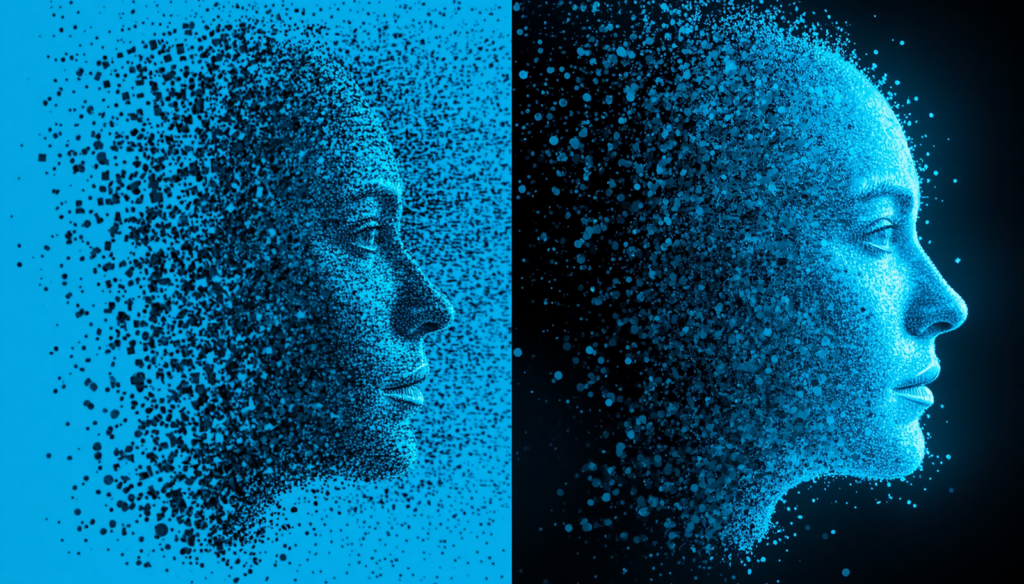
Diffusion models learn to make images by learning to destroy images. The model is trained on millions of legitimate photographs and learns how such images are corrupted with random noise, bit by bit, until the original image is no longer recognisable, replaced by pure static. This technique is called the forward diffusion process. At every stage the model learns precisely what the noise pattern looked like .
It essentially memorises the relationship between a clean image and its progressively noisy variants . The forward process we just described is the basis of ‘Multimodal AI & Diffusion Models’ for something way cooler. When a model actually understands how images are destroyed by noise, it now has the power to reverse that process and reconstruct something meaningful out of chaos. That’s the magic behind AI image generation.
The Reverse Process: Learning to Create from Noise
We generate by performing the learnt procedure backwards. The model begins with pure random noise, i.e., random pixel values, and then reduces the noise step-by-step, repeatedly, slowly making a cohesive image appear. Each denoising stage is directed by a text prompt, interpreted by a language model to orient the image towards the described content. After dozens or hundreds of denoising steps, the noise is a full-fledged detailed coherent image.
Practitioners of “Multimodal AI & Diffusion Models” compare this to a sculptor chipping away at a block of marble to build a statue – not creating something out of nothing, but chipping away things that don’t belong until the form becomes apparent. One of the most attractive notions throughout all of modern machine learning is the beauty of this technique — learning to create, by first learning to destroy.
The Major Players — Tools and Platforms Shaping Generative AI
The world of “Multimodal AI & Diffusion Models” technologies has exploded in the past 3 years, becoming a rich, competitive, fast evolving ecosystem. And new models and platforms come every month. And every month they push the envelope more and quicker. Knowing the big players, what they can do, who built them and what makes each of them unique will offer you a realistic map of the generative AI ecosystem, and help you choose the ideal tool for whatever creative or professional aim you’re going for.
Midjourney, DALL-E, and Stable Diffusion
Midjourney rapidly became the de facto gold standard for aesthetic image quality, with a distinctive artistic richness and compositional finesse that made it the instrument of choice for creative professionals. OpenAI’s DALL-E 3, integrated directly into ChatGPT, was trained to follow closely to prompts, creating images that closely match the exact characteristics of a text description, making it particularly helpful for precise, controlled image generation.
Stability AI adopted a different approach altogether, releasing Stable Diffusion as open source: the model weights were released so anyone could download it, run it locally, and fine-tune it. The open-source release of Stable Diffusion has hugely democratised “Multimodal AI & Diffusion Models”, creating a massive global community of developers, artists, and academics who have constructed thousands of specialised models, plugins, and applications on top of its foundation.
Adobe Firefly, Sora, and the Video Frontier
Adobe Firefly enters the generative AI sector with a key differentiator, trained only on licensed content, making it acceptable commercially for professional use without copyright worries. The tight integration with Photoshop, Illustrator and Premiere Pro brought generative AI directly to the world’s largest community of professional creative software users. OpenAI’s Sora pushed the frontier far further — demonstrating the capability to generate up to one-minute-long, cinematically realistic films from text descriptions, with constant physics, coherent camera movement, and persisting character identification between scenes.
The next big frontier is “Multimodal AI & Diffusion Models” in video, with tools like Runway, Pika and Kling hot on the heels of Sora. High quality video from text or images is advancing so rapidly that the film and advertising companies are already having to rethink their whole production workflows from the ground up.
Beyond Images — Audio, Music, and 3D Generation
Multimodal AI & Diffusion Models” is so much more than visual content. The same basic ideas of learning patterns from massive amounts of training data, and generating new content by reversing a learnt process, have found stunning applications in audio, music composition, voice synthesis and three-dimensional object development. Creative applications of these capabilities include entertainment, product design, architecture, gaming, virtual reality, accessibility and many other areas that are just beginning to be studied and appreciated in terms of their full transformative potential.
AI Music, Voice Synthesis, and Audio Generation
Tools such as Suno and Udio can create fully produced songs of any genre – including vocals, instrumentation, mixing and mastering – from a basic text description in under thirty seconds. ElevenLabs creates synthetic voices that are so natural and expressive, they are virtually indistinguishable from recordings of genuine human speakers – enabling the narration of audiobooks, production of podcasts and voiceovers for video at a fraction of the usual expenditures. Meta’s AudioCraft makes realistic ambient sounds, music and audio effects from text prompts.
The work of “Multimodal AI & Diffusion Models” in audio is revolutionising the music and voice industries, in exciting ways for creators who are getting powerful new tools, and profoundly challenging ways for professional musicians, voice actors and audio engineers who are directly impacted by this work. Such upheavals require considered responses from industry and policymakers alike.
3D Generation and the Metaverse Connection
The most frontier area of “Multimodal AI & Diffusion Models” is 3D content generation, which is generating 3D models, scenes and environments from written descriptions or single photos. OpenAI’s Point-E and Shap-E, DreamFusion, and new NVIDIA platforms can create textured 3D objects, which may be used in games, product visualisation, virtual reality experiences, and architectural visualisation. What took talented 3D artists days to create is now created in minutes as a starting point.
“Multimodal AI & Diffusion Models” in 3D generation will revolutionise the gaming industry, where creating 3D assets is one of the most expensive and time-consuming parts of game development, as well as emerging spatial computing and metaverse platforms, where three-dimensional content is the primary medium of experience and interaction.
How Multimodal AI Is Reshaping Creative Industries
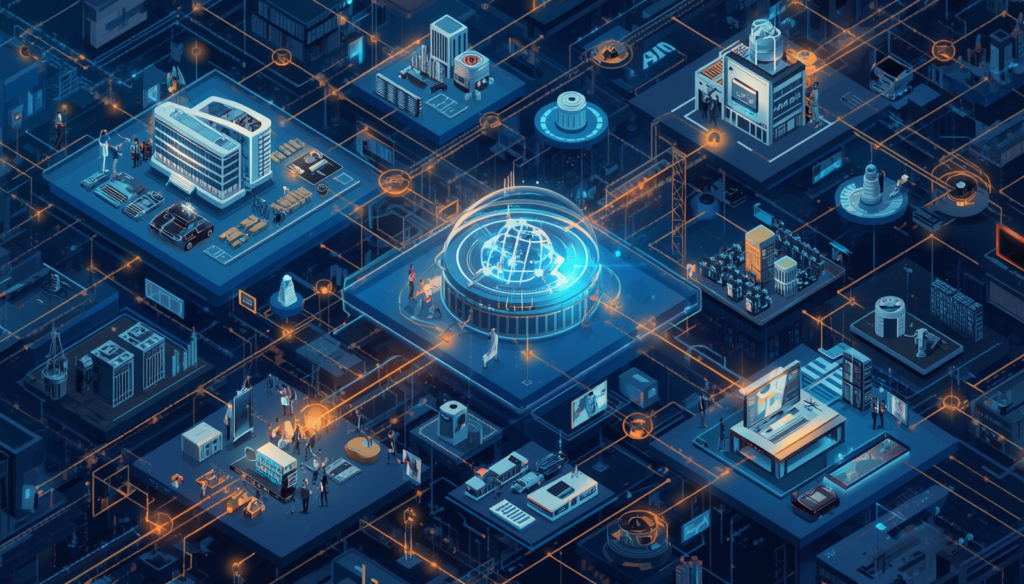
The coming of “Multimodal AI & Diffusion Models” to the creative industry has been one of the most disruptive and emotionally charged technical shifts in recent memory. For some creative professionals, these instruments are the most thrilling extension of their creative powers in generations. For others they constitute an existential danger to jobs and lives that have been established on decades of dedicated skill development. In truth, as is nearly often the case with truly transformational technology, the picture is more complicated than either extreme—and grasping that nuance is vital for anybody working in or adjacent to creative sectors today.
Advertising, Design, and Film Production
Multimodal AI & Diffusion Models in Advertising have shortened the campaign production time from weeks to days — allowing agencies to provide dozens of visual concepts for clients to assess in hours instead of hiring separate photoshoots for each direction. In graphic design, AI tools may remove background, resize images and vary style in a flash, leaving designers to focus on creative strategy and conceptual thinking.
AI-generated visual effects, background generation and de-aging tools are already finding their way into big releases in film production. “Multimodal AI & Diffusion Models” aren’t killing these sectors — but they are radically transforming the skill sets that matter within them. Creative pros who learn to shape and polish AI-generated content will prosper. If you don’t participate with these technologies at all, you risk getting left behind by others who do.
The Independent Creator Revolution
“Multimodal AI & Diffusion Models” has arguably had its biggest democratising effect on independent artists – individuals and small teams who lacked the funds, technological know-how or team size to produce high quality visual, audio and video material at scale. Today, a solitary entrepreneur may create excellent marketing collateral, product visualisations, and brand assets that previously only an agency budget would allow. Indie game developers don’t have to hire an art staff to make concept art, character designs and environment textures.
A self-published author can afford cover art using AI tools for very little money. Multimodal AI & Diffusion Models have levelled a creative playing field that was previously heavily tilted towards large, well-resourced organisations — and the explosion of independent creative content that has followed is one of the most genuinely exciting cultural consequences of the generative AI revolution.
The Ethical Landscape — Copyright, Deepfakes, and Responsibility
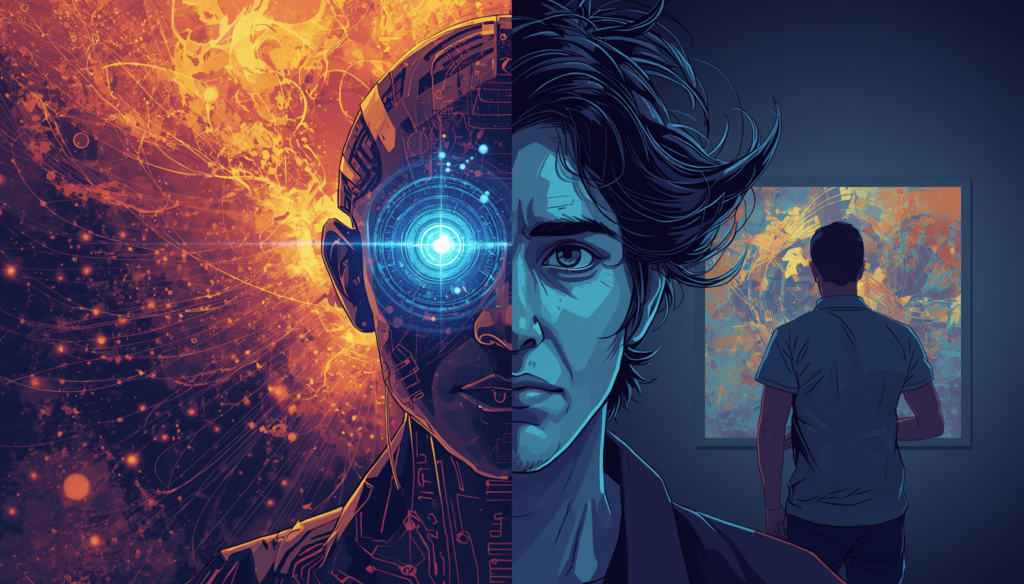
No discussion of “Multimodal AI & Diffusion Models” can be complete without an honest and serious engagement with the ethical problems these technologies pose. They’re not tangential worries, or afterthoughts – they’re core, pressing, and legitimately tough challenges the whole AI industry, creative community, policymakers, and society as large are actively wrestling with right now. Multimodal AI & Diffusion Models are at the intersection of intellectual property law, personal privacy, democratic integrity, and creative labour rights — and responsibly navigating that intersection requires informed, thoughtful engagement from all who use, build, or benefit from these technologies.
Copyright, Training Data, and Artist Rights
The most controversial legal and ethical question around “Multimodal AI & Diffusion Models” is whether training these models on large datasets of images, music, and text scraped from the internet — without the knowledge of the original creators — constitutes copyright infringement. AI systems that copied the unique styles of artists without their consent or pay have raised valid and urgent concerns about the violation of their creative rights and economic interests.
There are a number of high-profile litigation making their way through the courts around the world. “Multimodal AI & Diffusion Models” companies are responding in diverse ways, some negotiating licensing deals with content producers, some training on licensed or synthetic data, others providing opt-out options for artists who do not want their work utilised. The legal landscape is changing rapidly and how it is resolved will impact the whole generative AI sector for decades.
Deepfakes, Misinformation, and the Trust Crisis
The most disturbing use of “Multimodal AI & Diffusion Models” is to create deepfakes – AI generated images, audio and video of real people speaking and doing things they never said or did, in a realistic way. Deepfakes are used to create intimate images of real people without their consent, to disseminate political disinformation, to perpetrate financial fraud by cloning voices, and to undermine trust in legitimate documentary evidence.
As AI-generated media gets better and its creation tools become more accessible, it is more challenging for the average person to tell the difference between real and synthetic content. Developers and platforms of multimodal AI & Diffusion Models have a profound responsibility to implement detection watermarking, content authentication, and abuse prevention systems — and governments around the world are beginning to legislate requirements for exactly these kinds of safeguards to protect individuals and democratic institutions.
How to Start Experimenting with Multimodal AI and Diffusion Models
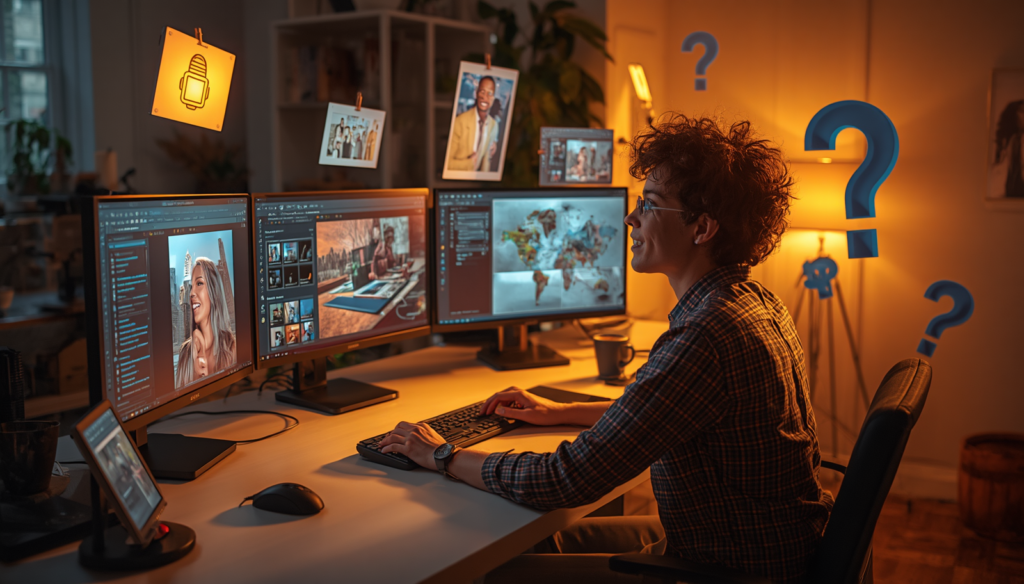
It’s really helpful to conceptually understand “Multimodal AI & Diffusion Models,” but the actual thrill of this technology is to experience it yourself. Making your first AI-generated image, playing around with your first AI music composition or watching a movie come to life from a text prompt you wrote yourself is one of those very unforgettable moments that makes the technology seem alive in a way no amount of reading about it can mimic. Multimodal AI & Diffusion Models are more accessible than ever — many of sophisticated tools are available for free or cheap — and the learning curve for basic creative experimentation is surprisingly gentle for anyone eager to just jump in and start playing.
Getting Started with Image and Audio Generation
For image production, start with DALL-E 3 in ChatGPT — it’s free to use and has a straightforward interface that makes it easy and pleasant to experiment with different prompts right away. Then check out Midjourney, which has a free trial and generates some of the most artistically appealing results anywhere. Alternatively, you can use the Automatic1111 interface to download Stable Diffusion for open-source exploration or utilise it via Hugging Face Spaces for free. Suno has a free tier for audio where you can create full songs with voices from text descriptions.
Beginners to “Multimodal AI & Diffusion Models” should concentrate on the art of prompt craft: explaining what you want, in explicit, vivid, well-structured language. Play with style references, light descriptions, composition directives, and mood parameters. The more detailed and deep you make your description of your vision, the closer the product will be to your creative goal.
Building Creative Projects and Going Deeper
Once you’ve got the basics, start making real creative projects, not just isolated photos. Design a compelling visual brand for an imagined firm. Generate a complete illustrated short story. Generate a music track using AI and combine it with AI-generated images. These project-driven studies will teach you much more about the capabilities and limitations of “Multimodal AI & Diffusion Models” than any tutorial can.
See the fast for technical details.ai course on diffusion models , read original DDPM and Stable Diffusion research articles on Arxiv , and follow researchers like Andrej Karpathy and David Holz on social media . Multimodal AI & Diffusion Models is a space where the gap between an interested novice and a really skilled practitioner may be crossed very rapidly — especially for those who combine regular, practical experimentation with intentional learning of the core ideas and methods.
Final Thoughts
You have just taken a full rich trip through “Multimodal AI & Diffusion Models”, from the physics of denoising to the cultural earthquake of AI-generated art. This is the technology that brought AI to the world’s attention in the most literal way, by allowing it to generate visuals, sounds and films for everyone to see, hear and experience. And the creative revolution it has spawned is still in its very early chapters.
“Multimodal AI & Diffusion Models” is not merely a technical accomplishment. It’s a cultural inflection point – making humanity ask new questions about creativity, authorship, truth, and the nature of art itself. These are not simple questions. But these are serious issues, and interacting with them is part of being an informed, responsible participant in the age of AI.
In Blog #9 we move on to one of the most critically essential issues in all of AI – Responsible AI and AI Safety: the ethics, the biases, the legislation, and the principles we need to make sure AI serves mankind rather than destroys it. This is the blog that ties it all together with knowledge and conscience.
The voyage is almost over – and the last two posts may be the most crucial yet.
People Also Ask
"What is Multimodal AI and how is it different from regular AI?"
Regular AI only works on one sort of data. “Multimodal AI & Diffusion Models” shows the incredible difference – multimodal systems recognise text images audio and video simultaneously in one unified model providing considerably richer more human like intelligence throughout every encounter.
"How do Diffusion Models generate stunning images from text prompts?"
What’s under the hood of AI image production is shockingly elegant. Multimodal AI & Diffusion Models is a lovely explanation – diffusion models learn by destroying images with noise, then expertly reverse this process step by step directed by your text prompt to create magnificent original visuals.
"What are the best AI image generation tools available in 2026?"
The appropriate creative AI tools make all the difference. Multimodal AI & Diffusion Models clearly pointing to Midjourney, DALL-E, Stable Diffusion and Adobe Firefly — each with its own capabilities for professional artists, designers, marketers and creative persons seeking amazing AI generated visual material today.
"How is Generative AI changing the creative industries in 2026?"
The creative sectors are changing at breakneck pace right now. In “Multimodal AI & Diffusion Models” we talk about how advertising cinema music and independent creators are utilising generative AI to create spectacular professional quality material faster cheaper and more accessibly than ever before considered humanly possible.