Introcuction
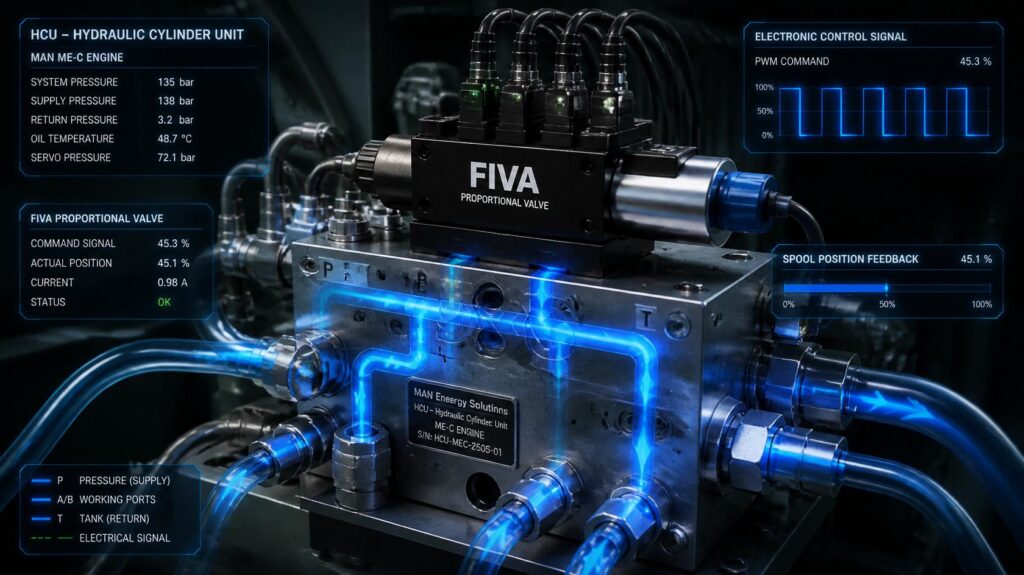
The evolution of modern two-stroke marine engines from camshaft driven mechanisms to electronically controlled hydraulic architectures has redefined thermodynamic efficiency in the global commercial fleet. At the heart of this technical revolution is “Proportional Valve Calibration”: Fine-Tuning Electronic Two-Stroke Injection Profiles to Reduce Carbon Output. As detailed in FIVA Overhaul & Calibration for ME Engines, this is critical to the entire combustion cycle and the precise timing of fuel oil pressure boosters and exhaust valve actuation in the Hydraulic Cylinder Unit ( HCU ). Through the methodical execution of “Proportional Valve Calibration”, technical managers may eliminate hydraulic timing hysteresis, optimise mean effective pressure curves, and drastically reduce daily carbon emissions.
The Mechanical Mechanics of Hydraulic Cylinder Units
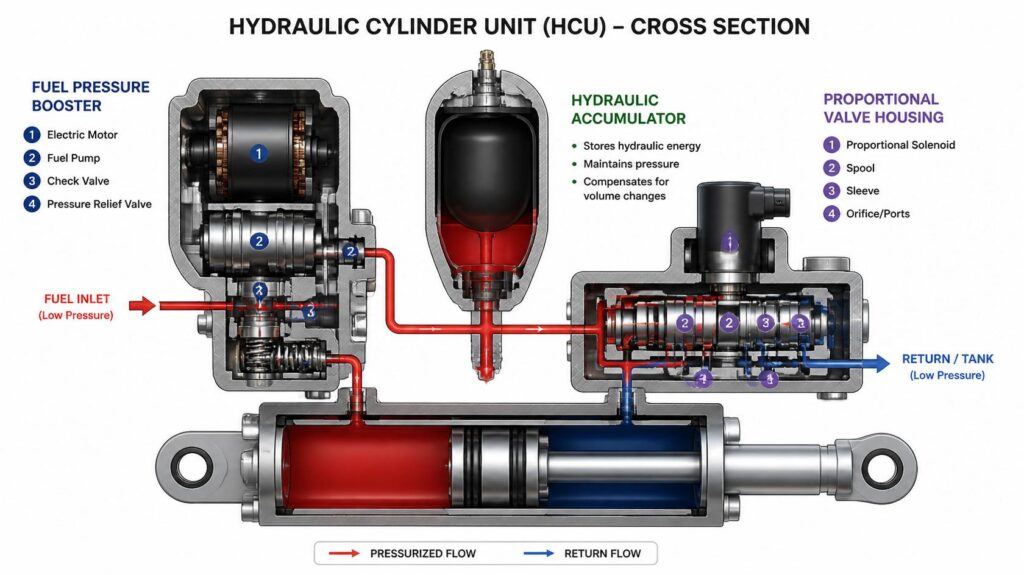
The prime executive muscle in electronically controlled two-stroke marine engines is the Hydraulic Cylinder Unit. The traditional mechanical camshaft is replaced by actuation by high pressure oil. Hydraulic high-pressure pumps pick up the system oil and circulate it through a special rail that supplies the fuel oil pressure boosters and exhaust valve actuators. However as the internal mechanical clearances increase over thousands of running hours, hydraulic reaction times tend to deviate slightly from the design requirements. Systematic “Proportional Valve Calibration” execution results in correct hydraulic spool alignment so cylinder firing profiles closely match factory electronic control commands.
Hydraulic Pressure Hysteresis and Timing Drift
Hydraulic pressure hysteresis in the FIVA or ELFThe valve body has small delays in response to the electronic control signal to actual physical spool movement. Thermal cycling and oil shear over time produce mechanical wear at the spool land edges, which modifies internal feedback signals. This timing drift if not corrected periodically with ‘Proportional Valve Calibration’ reduces the accuracy of the fuel injection resulting in late combustion, higher exhaust gas temperatures and increased specific fuel consumption. By performing “Proportional Valve Calibration” regularly, sensor feedback errors are eliminated and the spool moves instantly to provide maximum thermodynamic efficiency at all engine loads.
Maintaining System Oil Cleanliness for Spool Integrity
Manufacturing tolerances on proportional valve spools are tight, and absolute hydraulic oil cleanliness is necessary to prevent spool sticking and scoring. Physical friction from microscopic particles of dirt upset the delicate balance of the inductive position feedback loop against the valve housing. Strict fine-filtration techniques and routine “Proportional Valve Calibration” ensure that hydraulic feedback variations do not upset cylinder balance. Technical departments successfully protect their electronically controlled engines against detrimental combustion phase shifts and increased emissions by combining sophisticated oil filtration with scheduled “Proportional Valve Calibration”.
Variable Injection Timing via Advanced Control Algorithms
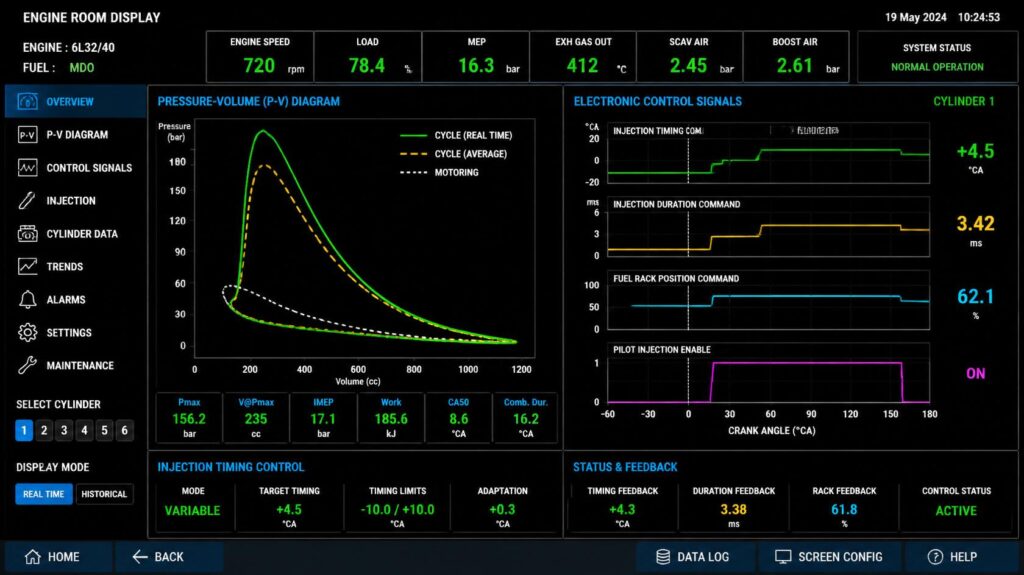
Dynamic Variable Injection Timing algorithms are of vital importance in modern electronically controlled marine engines for optimising combustion pressure at different operational loads. The engine control system modulates the start of fuel injection relative to crankshaft position to maintain peak cylinder firing pressure over a range of partial load conditions. To achieve this level of pressure control, the physical hydraulic components must react to electronic software commands in milliseconds. Through rigorous “Proportional Valve Calibration”, perfect physical valve movement to software algorithms is achieved, preventing premature pressure drops and ensuring optimal thermal efficiency.
Software Parameter Matching and Electronic Alignment
For the update of engine control software to apply modern variable injection timing methods, physical verification of proportional valve feedback signals is required. If the electronic control unit commands advanced injection and the physical spool has zero point bias, then actual combustion happens late in the stroke. Accurate “Proportional Valve Calibration” ensures that the electronic position sensor voltage matches the actual spool stroke, providing absolute control accuracy. This exact “Proportional Valve Calibration” allows the engine control software to run aggressive fuel-saving injection curves without the risk of peak pressure over-pressurization.
Optimizing Mean Effective Pressure at Low Loads
Due to slow steaming the two-stroke engines are forced to operate very far from their original thermodynamic design points where the conventional injection profiles are highly inefficient. Advanced variable injection algorithms compensate by advancing the injection angle to increase the mean effective pressure at part load. “Proportional Valve Calibration” directed towards the objectives assures “proportional control valves” immediately control hydraulic oil flow in the low-load transits. The Proportional Valve Calibration ensures stable combustion at low RPM which gets rid of excessive carbon fouling inside the cylinder linear exhaust ports and greatly reduces specific fuel consumption.
Retrofitting EcoNozzles for Superior Fuel Atomization
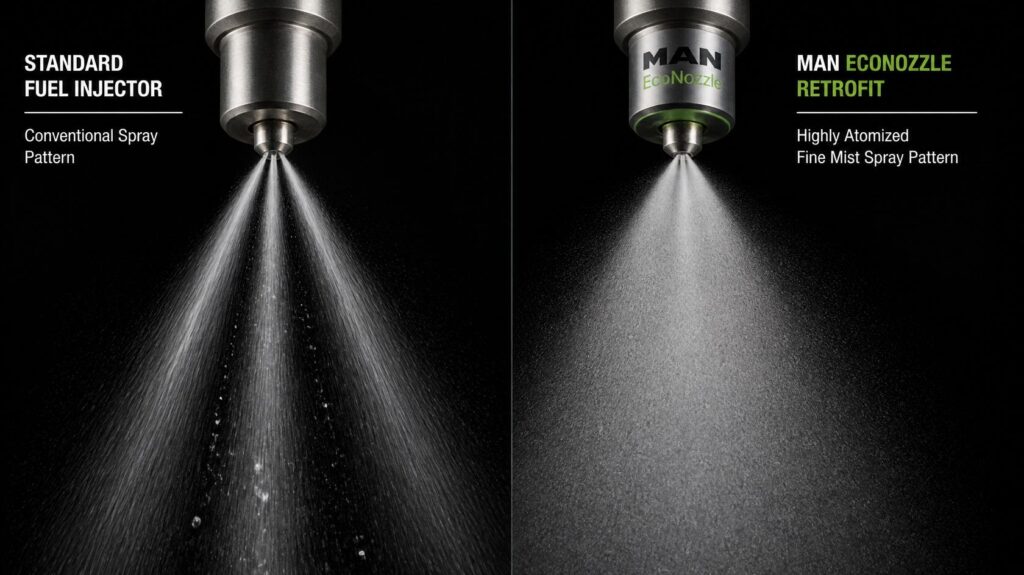
Retrofitting traditional fuel injection valves with state-of-the-art EcoNozzle retrofits delivers an instant physical advantage to cylinder combustion efficiency. These specialised fuel nozzles have improved fuel oil atomisation and flame propagation through optimised spray hole geometries and enhanced needle tip profiles. For maximum fuel savings with sophisticated nozzles, the pressure booster must give the optimum hydraulic delivery pressure. Together with systematic “Proportional Valve Calibration”, physical nozzle retrofits ensure the delivery of high-pressure fuel into the combustion chamber with absolute spatial and temporal accuracy.
Spray Pattern Optimization and Micro-Atomization
The EcoNozzles use re-designed orifice geometry to produce smaller droplets of fuel, thus increasing the rate of chemical mixing of fuel vapour with scavenge air. The enhanced atomisation reduces the ignition delay time and hence the full heat release near TDC. Routine “Proportional Valve Calibration” ensures rapid build up of hydraulic actuation forces therefore preventing partial needle lift and poor fuel atomisation. Clean combustion, reduction of carbon deposits on all cylinder heads by combining high performance nozzles and accurate ‘Proportional Valve Calibration’ for complete absence of unburnt hydrocarbons.
Preventing Thermal Hotspots and Liner Scuffing
Uneven distribution of fuel or the persistence of flame fronts can erode the protective coatings of cylinder lubricating oil producing severe liner scuffing and destruction of the piston rings. By upgrading to EcoNozzles the flame core is evenly directed away from the cylinder liner walls in order to avoid local thermal overload. This hardware modification can be combined with regular “Proportional Valve Calibration” to ensure uniform distribution of fuel mass to all injector valves on a single cylinder block. Precise “Proportional Valve Calibration” protects cylinder boundary lubrication and greatly prolongs the service life of pricey liners and piston crowns.
Eliminating Cylinder Load Imbalance via Dynamic Tuning
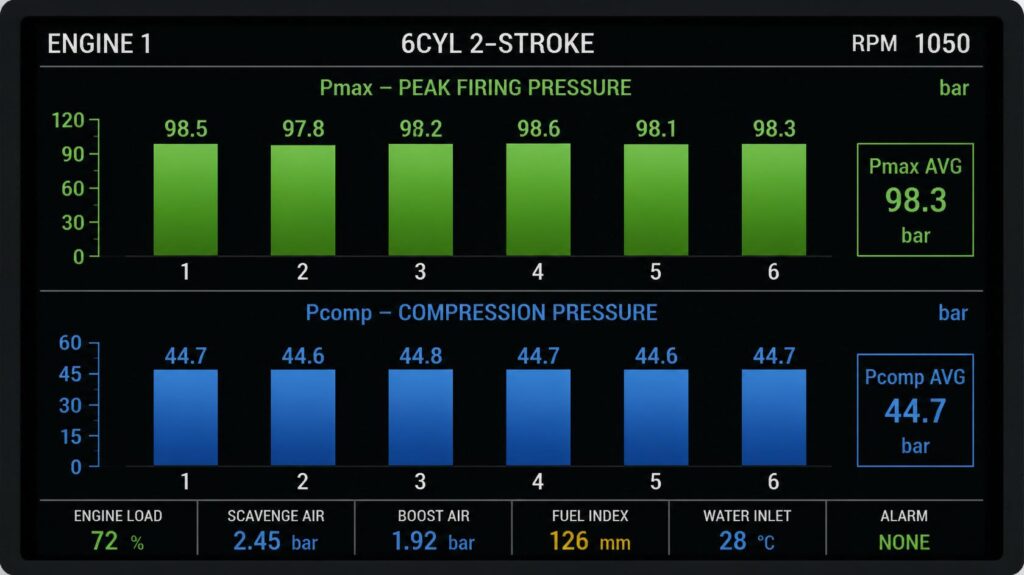
Cylinder load imbalance is a silent efficiency killer in a multi-cylinder two stroke engine . Cylinders operate against each other . In the case of different feedback characteristics of “proportional control valves” on neighbouring Hydraulic Cylinder Units, the peak firing pressures fluctuate considerably around the engine block. This thermodynamic disequilibrium forces engineers to reduce overall engine output, to avoid the mechanical stress on overloaded cylinders. “Proportional Valve Calibration” is carried out continuously to bring back similar hydraulic response times to all cylinder units, thus re-establishing uniform power distribution and optimising total engine torque output.
Balancing Peak Firing Pressures Across Cylinders
To have the same peak firing pressures in all cylinders, the fuel injection time and the total fuel mass injected each stroke must be matched. A slightly miscalibrated proportional valve changes the hydraulic booster stroke duration, creating a large pressure difference between the cylinders. The systematic “Proportional Valve Calibration” ensures electrical feedback signals are in sync with physical spool movement along the full engine rail. This full “Proportional Valve Calibration” avoids overload of individual cylinders, decreasing total fuel mass consumption and saving crankshaft bearings from cyclic torsional vibration stress.
Real-Time PMI Tuning and Closed-Loop Feedback
The modern engine diagnostic systems are continuously measuring the pressure curves in the cylinders and sending correction signals to the engine control architecture in real time. If the underlying hydraulic actuators exhibit mechanical hysteresis, these digital correction commands do not give the desired physical response Predictable actuator dynamics are restored by periodically performing “Proportional Valve Calibration” so that closed-loop tuning software can keep peak pressure tightly controlled. Reliable “Proportional Valve Calibration” allows automated tuning systems to perform micro-adjustments on the fly, optimising performance for changes in ambient weather conditions.
Reducing Specific Fuel Oil Consumption and Carbon Intensity
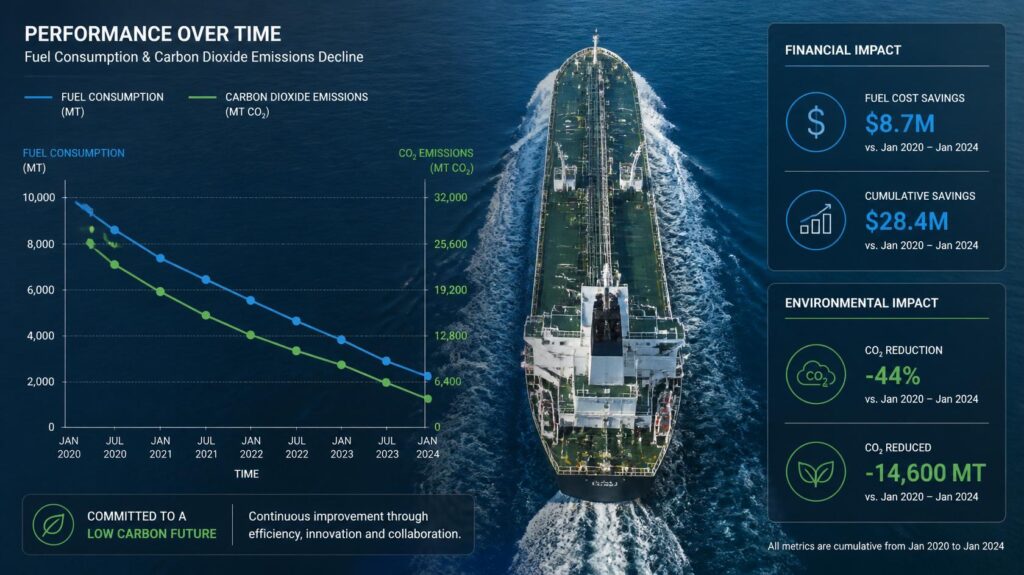
The main purpose of optimising the injection profile in two-stroke engines is to achieve a measurable reduction in Specific Fuel Oil Consumption (SFOC) over the full load range. 2 to 4 grams per kilowatt-hour. Even a small improvement in fuel efficiency means hundreds of tonnes of fuel saved each year on long commercial hauls. The Annual Efficiency Ratio is calculated with a numerator that is directly reduced by fuel burn reduction, allowing vessel owners to maintain their top-tier environmental ratings. Regular “Proportional Valve Calibration” is one of the most cost effective technical interventions you can invest in to immediately reduce your carbon output.
Translating Hydraulic Precision into Carbon Savings
Hydraulic control is particularly accurate, so that all of the heavy fuel oil or marine petrol oil is transferred to useful mechanical work. By controlling spool positioning accurately, post-injection dribbling and late combustion are eliminated, preventing unburned carbon from escaping out the exhaust stack. Routine “Proportional Valve Calibration” keeps thermal efficiency constant so that maximum shaft horsepower is directly proportional to the mass of fuel burnt. Such accuracy in “Proportional Valve Calibration” helps operators achieve stringent carbon intensity reduction targets without compromising on commercial transit speeds.
Safeguarding Compliance Ratings and Asset Value
Optimised combustion gives commercial vessels low carbon intensity ratings, and thus brings substantial charter party benefits and lower port fee structures. Conversely, vessels with deteriorated injection profiles have a fast decline in their ratings, which may trigger necessary corrective action plan actions. Proactive “Proportional Valve Calibration” included as part of routine engine room maintenance plans ensures that performance is not allowed to degrade to the point where it is relevant to formal emissions paperwork. Technical managers with a focus on “Proportional Valve Calibration” are well positioned to future-proof their vessels against mounting regulatory penalties and commercial marginalisation.
Overhauling Procedures and Inductive Sensor Zero-Point Calibration
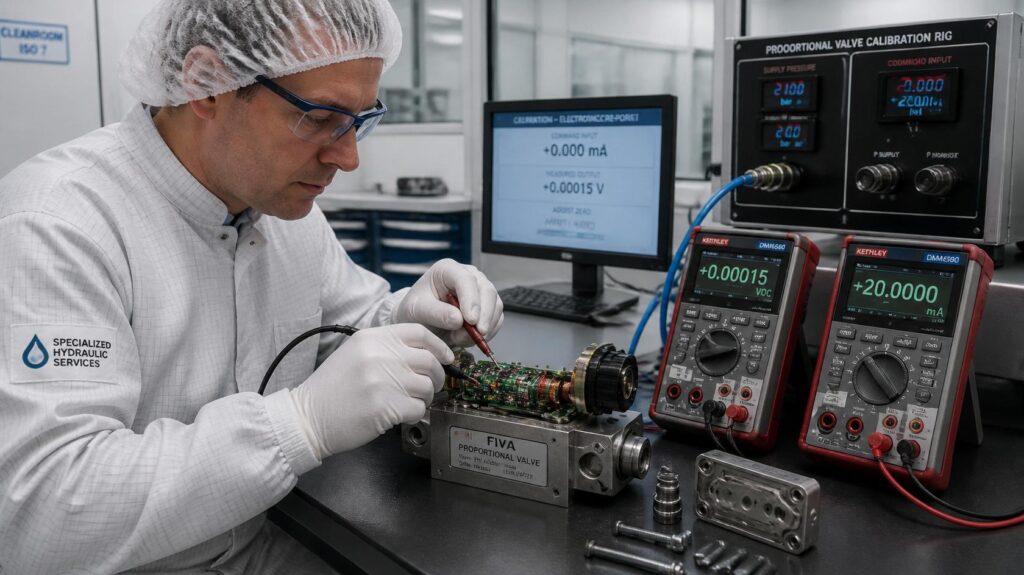
Proportional hydraulic control valve rebuilding requires scrupulous adherence to clean-room conditions, mechanical tolerances and electronic sensor alignment. The valve assembly is removed by specialised specialists at scheduled 20,000 to 32,000-hour service intervals to inspect spool lands, replace internal seal kits, and verify inductive position sensor responsiveness. The exact calibration of the electronic zero point needs to be re-established; a variation of micro-volt in the position feedback destroys the precision of the control loop. Standardised “Proportional Valve Calibration” procedures are performed on certified test benches and guarantee factory-spec performance when reinstalled on the engine.
Workshop Testing and Bench Benchmarking
Automated test equipment for bench testing overhauled proportional valves under real world hydraulic pressures of up to 300 bar. Test benches analyse internal oil leaks, dynamic reaction time and spool hysteresis curves at controlled fluid temperatures . Before the valve is re-installed on the HCU, bench-top “Proportional Valve Calibration” is performed to ensure that the inductive sensor voltage exactly matches the physical spool position. Calibration of the proportional valve on dedicated test rigs to the full specification avoids time-consuming troubleshooting during engine re-assembly and sea trials.
On-Board Installation and System Functional Tests
Installed physically on the Hydraulic Cylinder Unit. Automated system diagnostics must be performed by Technicians from the Main Operating Panel. These electronic tests move the hydraulic rail and the spool through their full operating range to verify feedback voltage linearity. Final on-board “Proportional Valve Calibration” to correct for small differences in wiring resistance between the Engine Control System and local junction boxes. The last step, “Proportional Valve Calibration” integrates the physical hydraulics with the digital control network.
Modernizing Electronic Engine Maintenance Regimes
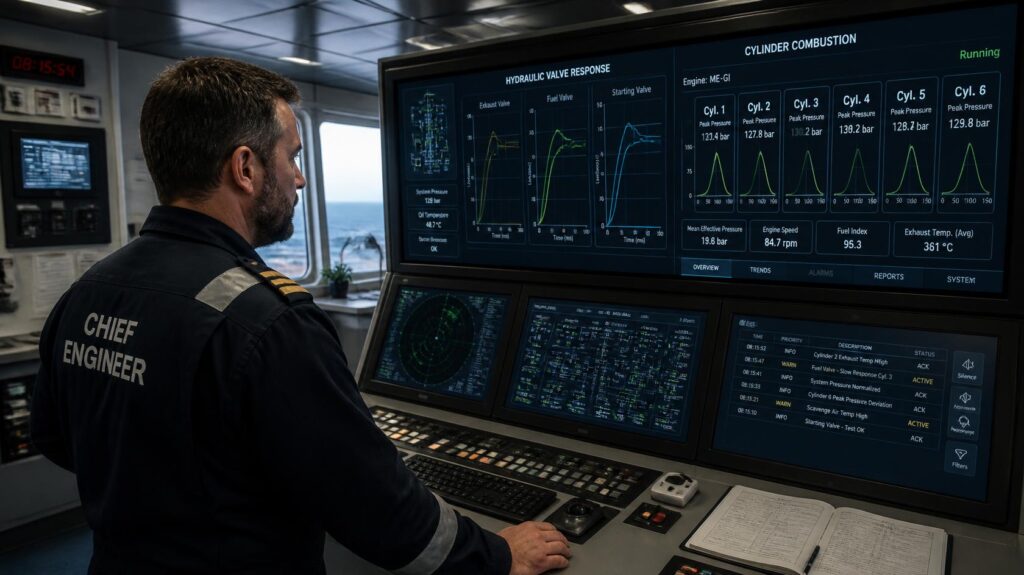
Moving away from reactive maintenance to digital condition monitoring is crucial to maintaining two-stroke engine efficiency. Automated telemetry networks allow today’s technical management teams to monitor real-time proportional valve reaction times and spool position variances. Superintendents can schedule targeted valve overhauls well in advance of combustion quality degradation by identifying slight decreases in hydraulic performance. The routine “Proportional Valve Calibration” is embedded into a digital maintenance management system, so that the physical asset optimisation is continuous, data-driven and fully transparent.
Predictive Analytics for Hydraulic Components
The coil current and spool position feedback of the proportional valve are continuously watched to give early warning of mechanical wear or oil contamination. Machine learning systems can analyse these data feeds to discover micro-second delays in spool actuation and predict component breakdown weeks in advance. As highlighted in Phase 2 Decarbonization Tightening: How the 11% Reduction Target Alters Machinery Maintenance Regimes, combining these predictive insights with planned “Proportional Valve Calibration” prevents unexpected engine shutdowns at sea. The “Proportional Valve Calibration” is planned proactively to minimise the vessel downtime and guarantee the highest thermodynamic efficiency during every commercial sailing.
Building a Long-Term Asset Integrity Strategy
A thorough decarbonisation strategy combines physical hardware changes, such as EcoNozzle retrofits, with advanced software algorithms and hydraulic adjustment. Investing in systematic engine room precision will keep vessel owners’ tonnage competitive in an increasingly constrained market.” Ensuring “Proportional Valve Calibration” is a basic element of regular dry-docking and servicing intervals protects important propulsion equipment. This dedication to “Proportional Valve Calibration” ensures operational compliance for the long run, lower fuel costs and sustainable asset profitability.
Conclusion

To master efficiency in electronic two-stroke engines, every hydraulic and electronic component in the Hydraulic Cylinder Unit must be absolutely precise. With increased operational carbon reduction requirements, ship managers can no longer afford the modest fuel costs of hydraulic timing drift or uncalibrated injection profiles. Optimised EcoNozzles, variable injection timing algorithms and continual “Proportional Valve Calibration” deliver rapid fuel savings. The single most dependable way to reduce carbon production and protect long-term asset value is to prioritise hydraulic accuracy.
People Also Ask
What is the primary role of Proportional Valve Calibration on MAN ME engines?
“Proportional Valve Calibration” calibrates the electronic position feedback voltage to the actual physical movement of the spool in the FIVA valve. This removes hydraulic timing drift and optimises timing for the fuel pressure booster and exhaust valve actuation to save fuel burn.
How do EcoNozzle retrofits complement Proportional Valve Calibration to cut emissions?
EcoNozzle retrofit enhances fuel spray atomisation and flame geometry. Together with “Proportional Valve Calibration”, the hydraulic system provides a precise amount of fuel mass at maximum pressure, which optimises the thermal efficiency and reduces specific fuel oil consumption.
How often should technical teams execute Proportional Valve Calibration on two-stroke fleets?
Technical teams will do “Proportional Valve Calibration” during scheduled 20,000 to 32,000 hour valve overhauls, or anytime telemetry shows a spool position offset. Regular calibration avoids load imbalance of the cylinder and unburned carbon emission.
Can uncalibrated proportional valves lead to severe cylinder liner scuffing?
Yes, uncalibrated valves cause timing hysteresis and uneven fuel delivery between injectors. “Proportional Valve Calibration” also prevents localised thermal hotspots, protecting cylinder lube oil films from being burnt off, and preventing catastrophic liner scuffing.