Introduction
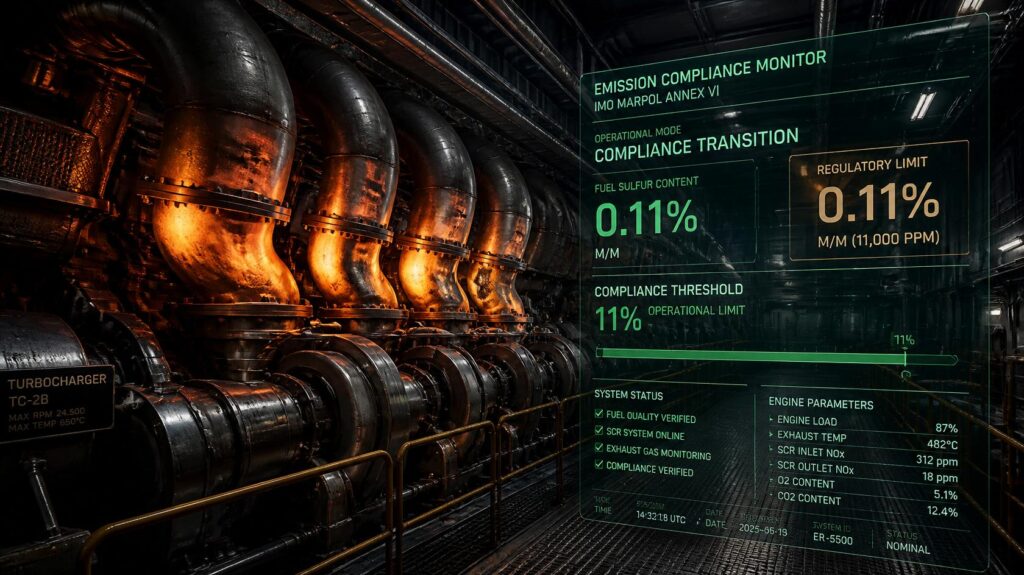
The introduction of the 2026 marine compliance review deadline has changed international shipboard engineering priorities permanently, elevating regulatory tracking from a flexible shore-side planning work to an urgent engine room discipline. With the official implementation of structural changes after the IMO review clause, fleet operations have formally entered the tough age of “Phase 2 Decarbonization Tightening”.
A critical technical review, Retrofitting for Decarbonisation: EEXI and CII, confirms that the entire progressive framework is based on a strict and mandatory 11% carbon intensity reduction objective relative to previous 2019 reference baselines, without any allowance for mechanical inefficiencies. A compliant operational profile under this revised regime requires a complete re-evaluation of conventional machinery overhauls, where a minor plant efficiency drop can see a competitive vessel immediately fall from an acceptable ‘C’ grade to an under-performing, commercially constrained ‘D’ or ‘E’ rating
Table of Contents
The Harsh Structural Reality of the Eleven Percent Hurdle
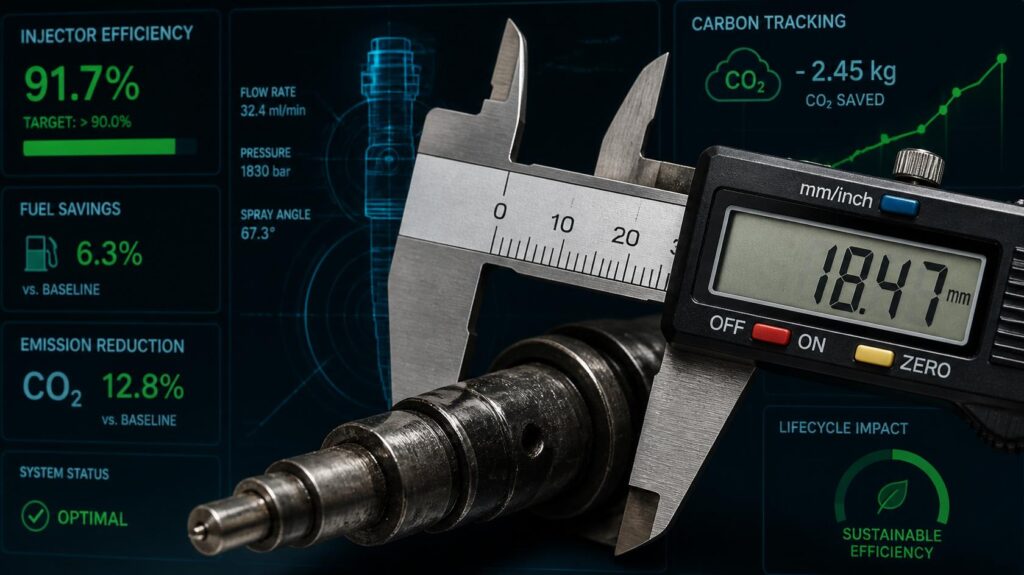
The operational intensity targets that once regulated global maritime trade routes were essentially doubled by the 2026 regulation deadline. With the strain of “Phase 2 Decarbonization Tightening”, ship management businesses can no longer rely on superficial data modifications or moderate slow steaming to maintain their compliance margins. The dramatic shift in regulation means that engineering departments need to think of carbon intensity as a maintenance metric that can be measured right now, not as some nebulous environmental milestone. Such is the case that the basic mechanical wear and tear routine vetting examinations that used to be able to pass now carry hefty commercial fines, converting run-of-the-mill machinery deterioration into an instant threat to the asset’s trading legality.
The Vanishing Buffer of Operational Parameters
The steep jump to an 11% reduction obstacle completely wipes out the operational safety cushion that technical superintendents had in the early regulatory phases. Every single tonne of heavy fuel oil burnt, with presently unoptimised shipboard machinery, is a significant mathematical penalty against the annual efficiency meter. This harsh truth is that normal mechanical degradation such as old fuel pumps or minor charge air cooler fouling can lead to ongoing performance losses that push the vessel beyond compliance limitations. The only method to prevent little operational deviations from resulting in significant losses in rating is to actively monitor maintenance to under “Phase 2 Decarbonization Tightening.”
Transforming Environmental Tracking into Pure Engineering Discipline
The existing legal framework has entirely eliminated the old divide between shore side environmental monitoring and day to day shipboard engineering activities. With “Phase 2 Decarbonization Tightening” in play, chief engineers are forced to weigh up each maintenance intervention in terms of preservation of thermodynamic efficiency, while managing an asset under severe constraints. Legacy maintenance practices focused exclusively on preventing catastrophic mechanical breakdown must be replaced with continual precision overhauls engineered to maximise fuel atomisation and eliminate exhaust heat losses. This technical change ensures that machinery room overhauls are based on data parameters, so ensuring compliance before performance wanders.
How Minor Mechanical Imperfections Cause Catastrophic Rating Drifts
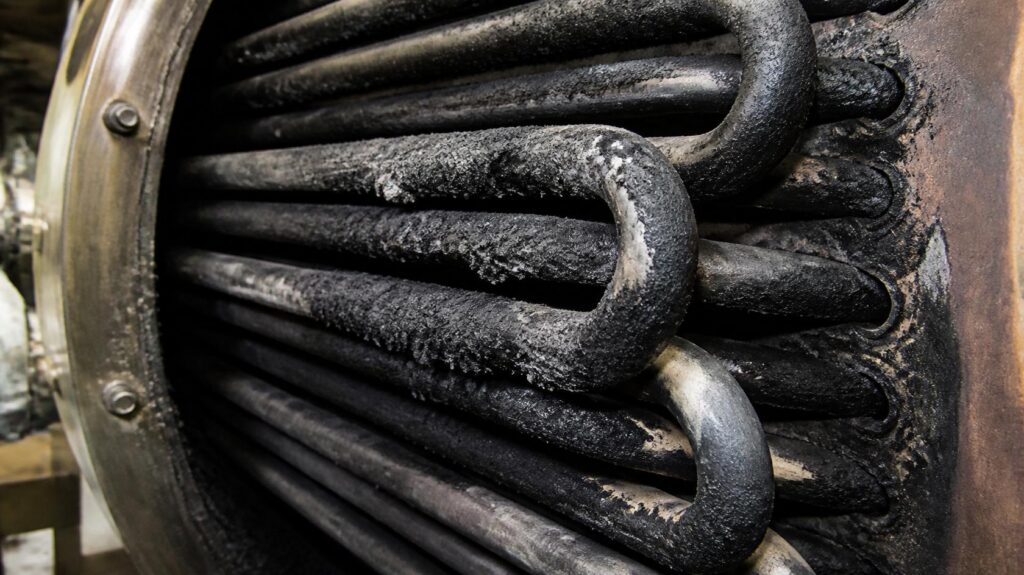
In the current operational environment tiny uncorrected mechanical flaws have proven to be the main contributors to unanticipated fleet compliance failures. The tight tolerances of “Phase 2 Decarbonization Tightening” lead to localised machinery systems degradation and a compounding efficiency reduction over an annual trade cycle. A slightly leaking exhaust valve, or a fouled surface on an auxiliary boiler tube, may seem trivial on daily logs but their persistent effect silently devalues the ship’s environmental status. These untracked failures expedite the shift from a steady “C” rating to a limited “D” rating, requiring corrective actions.
The Compounding Toll of Exhaust Valve Degradation
Minor damage to the primary engine exhaust valve seats leads to immediate compression losses that compromise the accuracy of the thermodynamic combustion cycle. The robust use of “Phase 2 Decarbonization Tightening” results in the reduction of certain fuel efficiency and requires the main propulsion plant to burn more fuel to maintain specified charter speeds. The constant thermal drain rapidly inflates the numerator of the carbon intensity index and shows that ignoring internal combustion characteristics results directly in mandatory compliance fines. Engineers need to find and repair micro-leakage with continuous cylinder indicator telemetry to avoid spoiling annual compliance rankings.
Auxiliary System Losses and Secondary Fuel Penalties
Auxiliary consumers in a bad state of maintenance and burning excessive fuel oil are a concealed operational vulnerability that erodes the vessel’s annual efficiency rating. Auxiliary equipment components are running with uncalibrated controls or poor combustion profiles, they consume excessive fuel when the vessel is stationary or at anchor. This operational imbalance under ‘Phase 2 Decarbonization Tightening’ is a direct penalty, with auxiliary emissions building up without any sailing distance being added. Technical departments should impose strict maintenance standards on all auxiliary burners to ensure that the ship’s rating is not jeopardised by secondary systems.
Overhauling Auxiliary Boilers with High-Efficiency Insulation
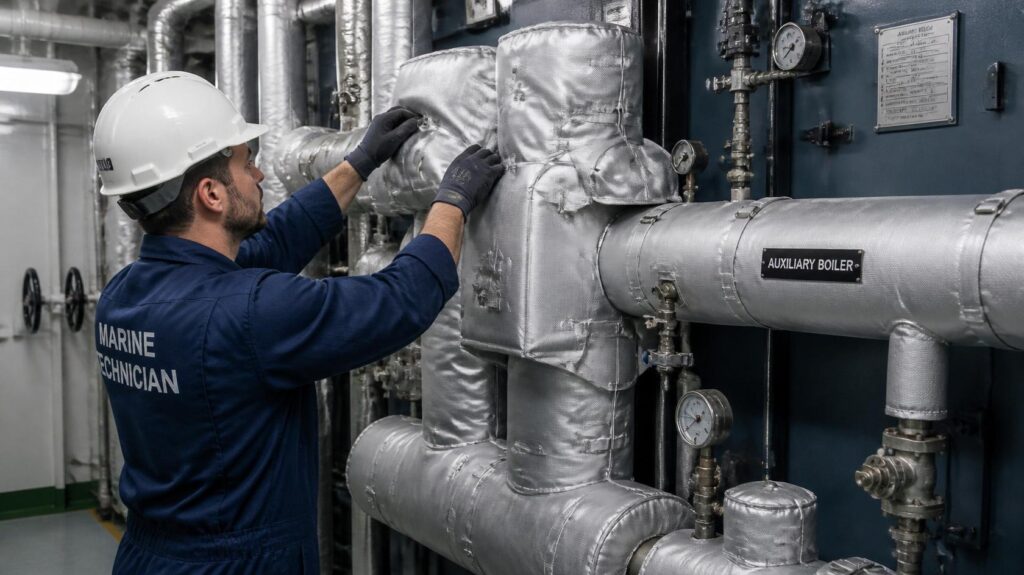
The way to reduce fuel consumption of auxiliary steam production plants is to go a step further than the regular maintenance routines and employ modern thermal insulation technologies. New high-efficiency insulating blankets, custom-fabricated and installed, are transforming auxiliary boilers and permanently altering the ship’s thermal retention profile. This selective alteration reduces radiant heat losses from the boiler shell and steam pipe networks and significantly reduces the number of auxiliary burner firing cycles when in port or at anchor. These high performance insulation materials will be introduced, which is a big move towards the direct implementation of “Phase 2 Decarbonization Tightening” measures in the auxiliary machinery room.
Eliminating Continuous Radiant Thermal Losses
Premium multi-layered thermal insulation blankets over exposed auxiliary boiler surfaces prevent quick dissipation of heat to adjacent engine room spaces. The physical retrofitting stage results in immediate energy savings by guaranteeing that the stored steam systems maintain their operational temperature profiles for extended durations without active fuel burning. By eliminating this idle thermal bleed, the vessel’s efficiency ratio is insulated from the steep penalties experienced during protracted port stays or anchorage delays within the rigid confines of “Phase 2 Decarbonization Tightening”.
Lowering Auxiliary Burner Firing Frequency
The large reduction of fuel mass consumption during operation of the vessel in non-sailing conditions is achieved by reducing the daily operational cycles of auxiliary boiler burners. The automated combustion systems burn significantly less often to maintain the cargo heating or fuel oil bunkering temperatures by maintaining internal steam temperatures with the high efficiency insulation retrofits. This technology solution provides clean data benefits under “Phase 2 Decarbonization Tightening” that allows shore-side managers to maintain stable carbon accounting profiles despite port congestion creating longer waiting times.
Retrofitting Main Engine Turbochargers with Part-Load Optimized Compressor Wheels
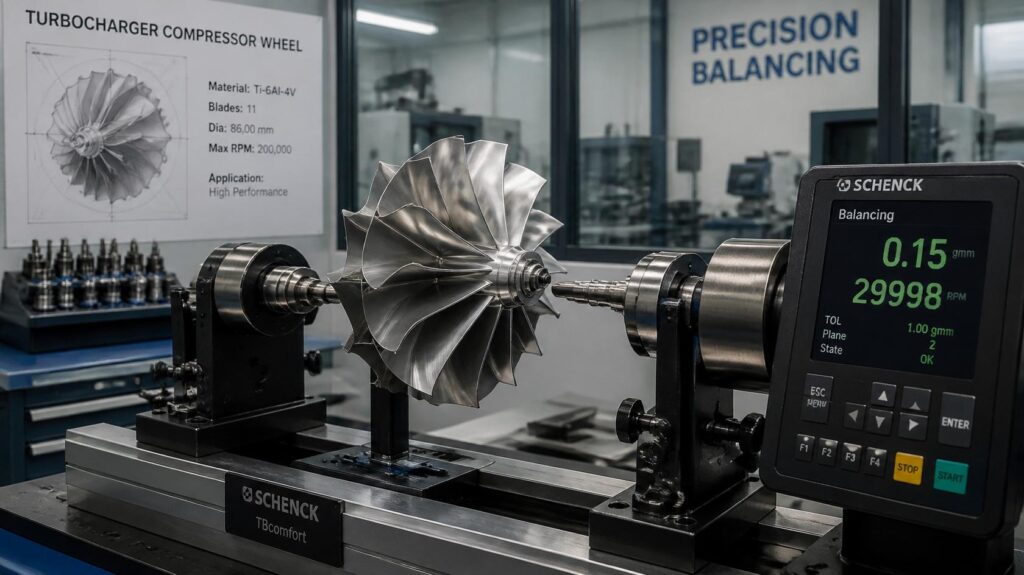
The most effective mechanical improvement to maintain propulsion efficiency is targeted main engine turbocharger upgrades during specified dry-docking intervals. The changeover from a conventional turbocharger compressor wheel to a modern part-load optimised design leads to a permanent change in the scavenging air profile of the engine at lower load ranges. This sophisticated aerodynamic modification moves the peak efficiency of the turbocharger down into the range of real-world operating speeds required by today’s environmental rules. This crucial engineering update, under “Phase 2 Decarbonization Tightening,” adds an extra layer of protection for good, guaranteeing perfect combustion efficiency without sacrificing mechanical reliability.
Optimizing Scavenging Air Dynamics at Lower Loads
Part-load compressor wheels have been optimised to provide much higher scavenging air pressures at reduced power settings of the main propulsion engine. This aerodynamic enhancement is aimed at achieving complete mixing and combustion of the fuel and air, so completely removing the characteristic smoky, unburned fuel state of traditional engines at low RPM. By “Phase 2 Decarbonization Tightening” regulations, maximising this thermodynamic efficiency at reduced service speeds dramatically reduces specific fuel oil consumption, directly reducing the vessel’s carbon intensity production.
Preventing High-Temperature Scavenging Air Surges
Most current part load turbo retrofit upgrades involve advanced diffuser modifications which extend the compressor stable operating envelope and avoid hazardous engine surging during rapid load changes. This mechanical agility contributes to maintaining the primary propulsion plant in a thermodynamically stable operating mode during changing climatic routing conditions, avoiding unexpected fuel spikes for the vessel. Such compressor adjustments can protect long-term asset value under “Phase 2 Decarbonization Tightening” for technical departments, showing that precision engineering retrofits trump passive operational speed constraints.
Transitioning to Continuous Condition-Based Telemetry Systems
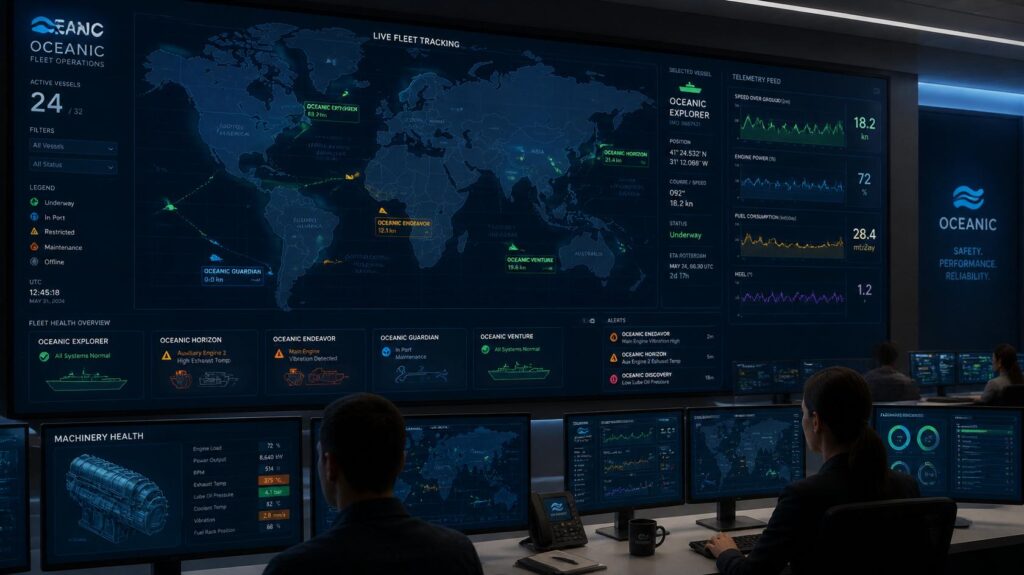
Data integrity at source is key, requiring a paradigm shift from outdated manual logs to a continuous condition based machine telemetry system. Ship management teams will need to deploy integrated sensor networks that deliver real-time engine performance indicators straight to automated analytics software systems. This digital retrofit provides an unbreakable record of fuel flow rates and shaft torque data, replacing retrospective, speculative noon estimations. The major administrative tool for dealing with “Phase 2 Decarbonization Tightening” and performing targeted maintenance interventions before performance degradation is the use of continuous telemetry.
Replacing Lagging Indicators with Live Telemetry Streams
The implementation of automated machinery sensors gives technical superintendents instant insight into engine room efficiency factors in real-time. This digital capacity removes the data blind spots of the manual records and allows shore-side compliance personnel to rapidly see the first indicators of thermal efficiency decline. Live data allows operators to make precise mechanical adjustments, including fine-tuning fuel injection time, before minor operational faults escalate into rating decreases, all within the stringent limits of “Phase 2 Decarbonization Tightening.
Eliminating Data Fraud and Human Calculation Errors
Automated telemetry configurations gather data directly from digital mass flow meters and shaft torque sensors, eliminating the human error factor from annual compliance records. That high-fidelity data stream means flag state verifiers obtain clean, audited performance statistics that verify the vessel’s actual operational profile. Under “Phase 2 Decarbonization Tightening”, by providing this open data infrastructure, shipowners defend their assets against the business risk of artificial rating inflation from uncalibrated analogue gauges or erroneous manual computations.
The Heavy Commercial Weight of the A-to-E Rating System
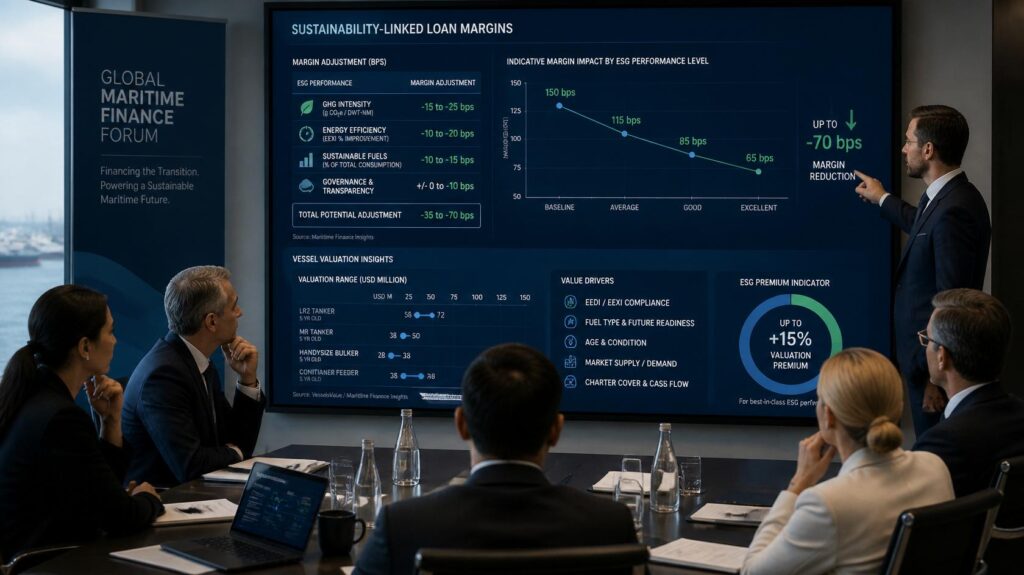
Operational efficiency grades are calculated annually and have successfully tied physical engine performance directly to the underlying asset value of worldwide commercial tonnage. Proactive machinery management helps fleet assets reach an excellent ‘A’ or ‘B’ level and gain a clear edge in the competitive charter market. In contrast, vessels that slip into low performance categories because of poor maintenance are quickly commercially isolated and rapidly depreciate their assets. “Phase 2 Decarbonization Tightening” is thus a business requirement to navigate, as top tier charterers totally screen out underperforming boats.
Securing Premium Fixtures via Verified Carbon Efficiency
“Ships with premium ratings enjoy significant financial premiums and long-term career prospects with large international commodity dealers. As detailed in Frictional Drag Mitigation: Moving Beyond Slow Steaming to Combat Hull Fouling and Protect Your Rating, maintaining high hydrodynamic efficiency is just as critical as engine performance. If the combined efficiency gains are proven under the stringent criteria of “Phase 2 Decarbonization Tightening”, owners can negotiate good charter party terms with built-in operational flexibility clauses. This commercial edge turns sophisticated engine room maintenance from an expensive compliance burden into a critical component of corporate profitability and fleet marketability.
The Threat of Port State Control Corrective Interventions
Conversely, ships in the lower performance categories are immediately subject to legal and operational examination by international maritime authorities. Under the severe enforcement of “Phase 2 Decarbonization Tightening”, any vessel rated ‘E’ in a single year or ‘D’ for three consecutive years will be subject to an obligatory Corrective Action Plan assessment. If these flag-state specified improvements are not made, the ship’s Statement of Compliance can be cancelled, which essentially grounds the underperforming asset.
Future-Proofing Fleet Asset Life Cycles Beyond 2026
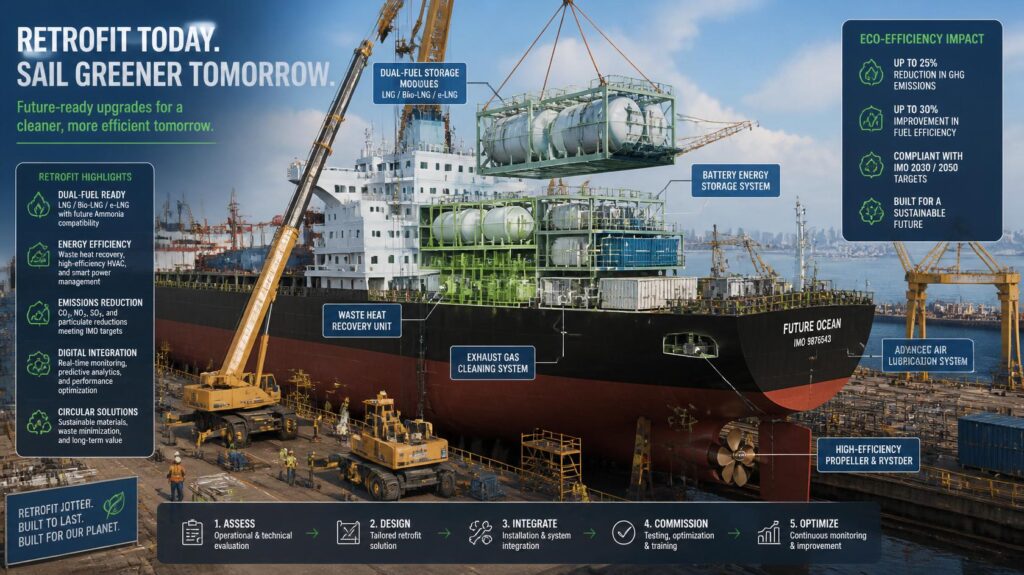
The rules that set out worldwide maritime emissions are deliberately meant to grow increasingly stringent as the industry advances towards 2030 net-zero aspirations. Ship management businesses must recognise that the machinery configurations that meet compliance requirements now will not pass regulatory inspection tomorrow as reduction hurdles get tighter. To stay ahead of the rising curve, a continuous effort is needed to physically equip ships with modern thermodynamic changes for all vessel types. The only reliable approach to survive the rolling challenges of ‘Phase 2 Decarbonization Tightening’ long-term is through pro-active technical preparation.
The Challenge of Escalating Annual Carbon Hurdles
The inevitable escalation of global carbon targets year on year leaves no opportunity for technical or operational stagnation in competitive ship management organisations. As the dividing lines for compliant ratings rise upward, older conventional tonnage is at an increasing risk of premature economic obsolescence. This means that fleet managers need to be continually assessing all assets against these future standards and ensuring that early investments, for instance in turbocharger modifications and insulation systems, will see them in good stead for compliance under “Phase 2 Decarbonization Tightening”.
Preparing for Alternative Low-Carbon Fuel Integrations
In the long run, enhanced tuning of equipment will be combined with alternative low carbon or dual fuel propulsion systems to ensure fleet survivability. These alternate fuel routes are connected to high-quality telemetry networks to optimise total energy reduction, and to allow ships to travel at competitive service speeds without exceeding carbon limits. By embedding this multi-layered technological approach into existing modification initiatives under “Phase 2 Decarbonization Tightening,” the owner may reliably protect their assets for the next decade of maritime decarbonisation.
Conclusion
Success in today’s challenging operational realities of maritime trade demands an unwavering dedication to precision machinery optimisation and telemetry tracking. The shift into “Phase 2 Decarbonization Tightening” is evidence that neglecting minor mechanical flaws leads to regulatory failure and commercial isolation for global fleet. Proactive ship owners can avoid rating penalties and ensure their assets are highly marketable by investing in part-load turbocharger retrofits and high efficiency boiler insulating blankets. Still, the renovation of machinery rooms based on data is the best way to improve commercial operations and ensure the long-term profitability of the fleet.
People Also Ask
What immediate operational changes does Phase 2 Decarbonization Tightening force on older vessels?
Under the stringent criteria of “Phase 2 Decarbonization Tightening”, older vessels may no longer depend on superficial changes. They need to set up immediate condition-based maintenance routines so that their ratings do not slip from ‘C’ to ‘D’ due to slight mechanical degradation.
How do auxiliary boiler insulation retrofits help satisfy Phase 2 Decarbonization Tightening targets?
Replacing the insulation blankets on boilers with high efficiency ones immediately aids “Phase 2 Decarbonization Tightening” by eliminating radiant thermal losses. This decreases the frequency of auxiliary burner firings during port stays, so that zero-distance fuel usage does not contribute to inflating the vessel’s yearly carbon index.
Why are turbocharger modifications critical under the current Phase 2 Decarbonization Tightening framework?
The upgraded part-load optimised compressor wheels push the peak scavenging efficiency into lower RPM ranges, which meet the “Phase 2 Decarbonization Tightening” requirements. This reduces specific fuel usage at lower speed, locking in engine efficiency before performance drifts.
What are the commercial consequences of ignoring Phase 2 Decarbonization Tightening metrics?
“D” or “E” ratings for underperformance are the result of not looking at “Phase 2 Decarbonization Tightening” metrics that will require mandatory flag-state Corrective Action Plans. The best charterers are screening these boats out aggressively, resulting in fast asset degradation and commercial isolation in the spot market.