Introduction
Welcome to the AI Mastery Series. In Blog #1 i.e. “Generative AI Demystified: What Is Artificial Intelligence and Why It’s Reshaping the World“, we learned what Artificial Intelligence is and why it is altering the world. In Blog #2, i.e. “Machine Learning Roadmap: The Core Engine Powering Every AI System” we explored the Machine Learning Roadmap and understood how machines learn from data. In Blog #3, we dig even further – into the technology behind practically every jaw-dropping AI success of the past decade. It has a name that sounds complicated but is in fact one of the most wonderfully logical ideas in all of science.
The name is “Deep Learning Explained” “Deep Learning Explained” is not simply a topic – it is the key that opens the door to modern AI. Every time you talk to a voice assistant. Every time an AI recognises your face to unlock your phone. Every time ChatGPT creates a piece that sounds entirely human – deep learning is behind it. But most people don’t know how it works or where it originates from.
This blog is going to change all of that. Deep Learning Explained will teach you what deep learning is, how neural networks are constructed and taught, why they are so powerful, and how they connect directly to the AI technologies you use every day. No fancy maths. No confusing jargon. Just plain, honest, human language. One concept at a time. By the time you finish this blog, deep learning won’t seem that mysterious. It will feel like something you really know.
Table of Contents
What Is Deep Learning and How Is It Different from Machine Learning?
Deep learning is a subset of machine learning, but a specialised one that operates in a fundamentally different—and far more powerful—way. Traditional machine learning requires people to pick out the right features from data and feed them in, whereas deep learning learns the features itself. This distinction is crucial. This is why Deep Learning Explained begins here. And that is what makes deep learning so effective at dealing with images, audio, language, and video in a fashion that traditional machine learning can’t match. That’s how AI moved from being amazing to actually world-changing.
The Leap from Machine Learning to Deep Learning
In classical machine learning, a human expert has to look at the raw data and identify what attributes are important. In a house price prediction model, a person would select features such as square footage, location, and number of bedrooms. The machine then learns the selected features. This manual process is removed completely by deep learning.
You feed it raw data – raw pixels of an image, raw audio waves of a speech recording – and it finds out which aspects are important by itself. This is what Deep Learning Explained calls a major breakthrough. This implies deep learning can solve problems where people don’t even know what features to look for – making it strong well beyond what regular machine learning can attain.
Why "Deep" Learning? What Does Depth Mean?
Deep learning gets its name from the ” deep ” in deep neural networks – the number of layers. A shallow network may have one or two levels. “Deep Learning Explained” A deep network is made up of several layers, built on top of each other, perhaps hundreds or even thousands of layers. Each layer learns a somewhat more complex thing than the previous one.
In an image recognition network, the first layer might learn to recognise edges. The following layer mixes edges into figures. The next layer mixes forms to form objects. The network recognises a human face at the last layer. “Deep Learning Explained” employs this layered analogy as the key mental image – depth is complexity of knowledge. More layers, more nuance, more intellect.
The Human Brain Inspiration — How Neural Networks Were Born
Deep learning’s history begins with one of the most audacious problems ever raised in science: can we make a machine that thinks like a human brain? The answer, it seems, is — sort of. Once you realise that artificial neural networks are loosely modelled on the organic structure of the brain, the whole idea comes into focus. Deep Learning Explained takes you back to where this idea came from, because knowing the “why” behind the design makes the “how” so much easier to understand and remember.
Neurons, Synapses, and the Brain's Architecture
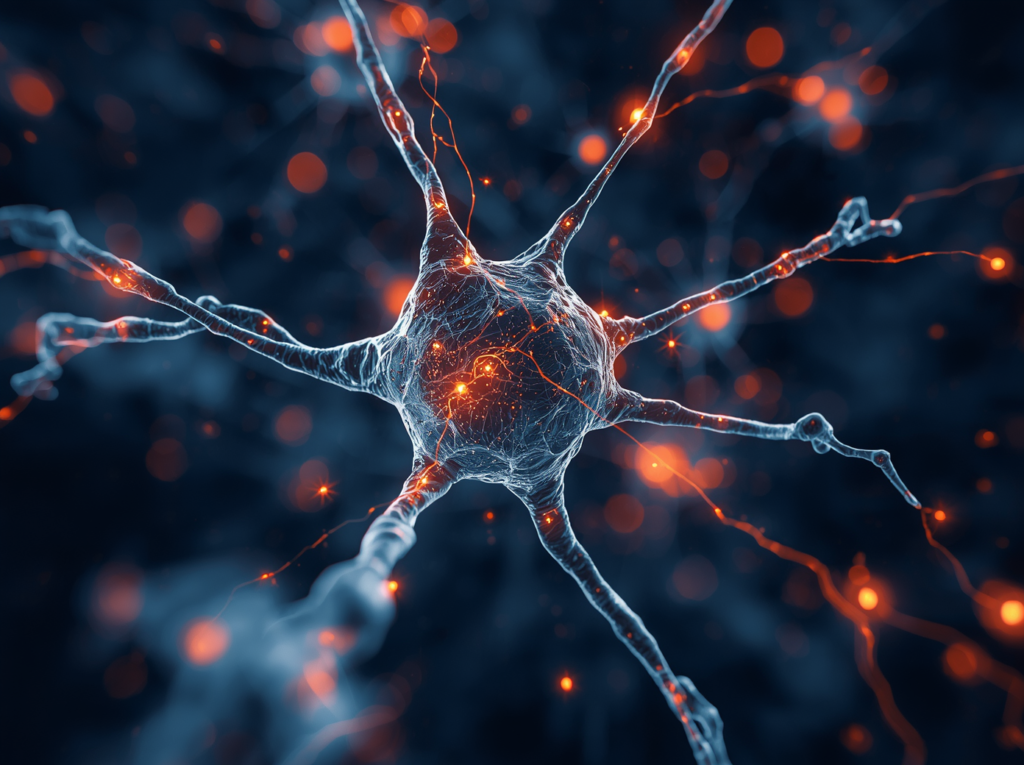
The human brain has around 86 billion neurones, small cells that receive, process and transfer information via electrical signals. Neurones connect to thousands of other neurones at junctions called synapses. “Deep Learning Explained” — Just Like Your Brain Work. If the signal is strong enough, the neurone “fires” and passes the signal on. Learning occurs when some connections become stronger via repetition and experience.
This structure is mimicked, in a reduced fashion, by artificial neural networks – artificial neurones, termed nodes, accept inputs, process them, and pass the outputs ahead to the next layer. Deep Learning Explained ” I want you to take this parallel well … Your brain learnt to read through strengthening some neural paths over time . Artificial networks learn in exactly the same way, frequent exposure and incremental adjustment.
From the Perceptron to Modern Deep Networks
The first artificial neurone was invented by Frank Rosenblatt in 1958, and was dubbed the Perceptron. A single node that can make simple binary judgements. For decades, scientists had trouble getting neural networks to perform well with more than one or two layers. The math was there but the computational power and data weren’t. Then in 2006 everything changed.
Geoffrey Hinton – now known as the “Godfather of Deep Learning” – showed that deep networks could be successfully trained using the correct methodologies. “Deep Learning Explained” is the milestone of this historical turn. In less than a decade, deep networks have gone from an academic curiosity to the technology powering voice assistants, self-driving cars, medical diagnosis tools, and generative AI. One breakthrough made all the difference
The Architecture of a Neural Network — Layer by Layer
Neural networks consist of layers , and each layer has a function . Understanding the architecture of a neural network is one of the most critical stages in the road to mastering deep learning. Deep Learning Explained breaks it down layer by layer, in the simplest way imaginable. Once you get the framework in your head, everything else in deep learning becomes much easier to understand – training, optimisation, backpropagation and so on. It’s like having a building’s floor plan before you start walking through the rooms.
Input Layer, Hidden Layers, and Output Layer
Neural networks always have three sorts of layers. The first layer gets the raw data, like the pixel values of a picture or the words of a sentence. All the learning happens in the hidden layers . These layers take the input and change it through a series of mathematical operations . They find patterns and construct more complicated representations .
The output layer gives the final outcome, whether it be a classification, a prediction or a piece of generated content. ” Deep Learning Explained ” Imagine a factory assembly line. You bring in raw materials ( input ) and at each station ( hidden layer ) the raw materials are converted and at the end you receive a finished product. The more stations on the queue, the more fancy and complicated the end product might be.
Weights, Biases, and Activation Functions
Three essential elements control the flow of information within each layer. Weights regulate the degree to which one neurone affects another; a high weight indicates a strong connection, whereas a low weight indicates a weak one. Biases provide the network additional flexibility to match intricate patterns by enabling it to change its outputs.
The non-linearity that enables deep networks to learn intricate, curved, real-world patterns rather than just straight lines is introduced via activation functions, which determine whether a neurone should “fire” or remain silent. “Deep Learning Explained” views these three elements as neural network tuning knobs. The network turns these knobs millions of times during training until it finds the correct responses. It’s a huge, automated optimisation process that’s happening really quickly.
How Neural Networks Learn — Training and Backpropagation

Creating a neural network is one thing. Training it to actually be useful is another story. Where deep learning really gets magical is in the training process — and that enchantment comes from a very elegant method called backpropagation. The difference between someone who utilises AI tools and someone who understands them is knowing how a network learns. “Deep Learning Explained” explains this in plain words. Once you get training and backpropagation you get the core mechanism underpinning any AI model in the world today.
Forward Pass, Loss Functions, and Error Measurement
Training starts with a “forward pass” – a pass in which data is passed forward through the network, from the input layer to the output layer, and the network produces a prediction. That forecast is then checked against the correct answer using a “loss function” – a mathematical measure of how inaccurate the prediction was. The loss is substantial if the network classifies an image of a dog as a cat. If it guesses right, the loss is low.
In “Deep Learning Explained” the loss function is described as the network’s report card. Training is straightforward: minimise the loss. “Make the report card as good as possible. Everything that follows—backpropagation, gradient descent, optimization—is just to serve that one purpose. Get the answers correct.
Backpropagation and Gradient Descent
The backpropagation process starts after the loss is calculated. The error signal is propagated backwards across the network and each weight is changed slightly to lessen the error. This change is due to a method called ” gradient descent ” – the network calculates which way to push each weight to reduce the loss, and takes a little step in that direction. Repeat this millions of times over thousands of training samples and the network slowly gets better and better. This process is described in “ Deep Learning Explained ” as the network “ learning from its mistakes ” in a very mathematical but very real way . It is slow and computationally expensive – but the results are, as we can all see now, nothing short of astounding.
Types of Neural Networks and What They're Used For
Different neural networks are constructed in different ways. Various architectures have been created for various data kinds and problem categories. The most significant neural network types are introduced in “Deep Learning Explained” so you can identify them, comprehend their purposes, and choose whether each is the best tool for the job. Anyone who wishes to use AI more than just as a tool and begin creating with it has to realise this. Every building is the result of millions of hours of experimentation and decades of study by world-class scientists.
CNNs for Images and RNNs for Sequences
CNNs, or convolutional neural networks, were created especially for picture data. In order to fully comprehend an image, they employ a unique process known as convolution, which scans the image to identify local elements like edges, textures, and forms. How Neural Networks Mimic the Human Brain — and Where They Fail Face recognition, medical imaging, self-driving car vision, and social media photo tagging are all powered by CNNs. Text, speech, and time-series data are examples of sequential data that Recurrent Neural Networks (RNNs) are intended to handle.
When processing the current input, they can take into account earlier inputs thanks to a type of memory. CNNs and RNNs are presented in “Deep Learning Explained” as two of the most practically significant designs in AI history; when combined, they account for the great bulk of current deep learning applications.
Transformers: The Architecture Behind Modern AI

Transformers are the architecture that defines the 2020s, whereas CNNs and RNNs were the mainstays of the 2010s. The Transformer design, which was first presented in a seminal 2017 paper titled “Attention Is All You Need,” makes use of a process known as “self-attention” that enables the model to take into account each component of an input simultaneously rather than sequentially.
Training became significantly faster and more scalable as a result. Every significant language model in use today, including GPT, BERT, Claude, and Gemini, is based on the Transformer design. According to “Deep Learning Explained,” this is arguably the most significant architectural advancement in AI history. Anyone who is serious about comprehending modern AI must grasp the Transformer, even at a high level. It is the architecture that enabled large-scale generative AI.
Real-World Applications of Deep Learning Today
Deep learning is more than just a theoretical idea found in academic labs and research publications. It is currently operating in production systems and has both apparent and invisible effects on the daily lives of billions of people. Since the greatest approach to fully comprehend a technology is to see how it functions in the real world, “Deep Learning Explained” brings the idea to life with tangible, relevant examples. Deep learning is present everywhere, performing amazing tasks silently and consistently, from your automobile to your music app, from your smartphone to your hospital.
Healthcare, Autonomous Vehicles, and Language
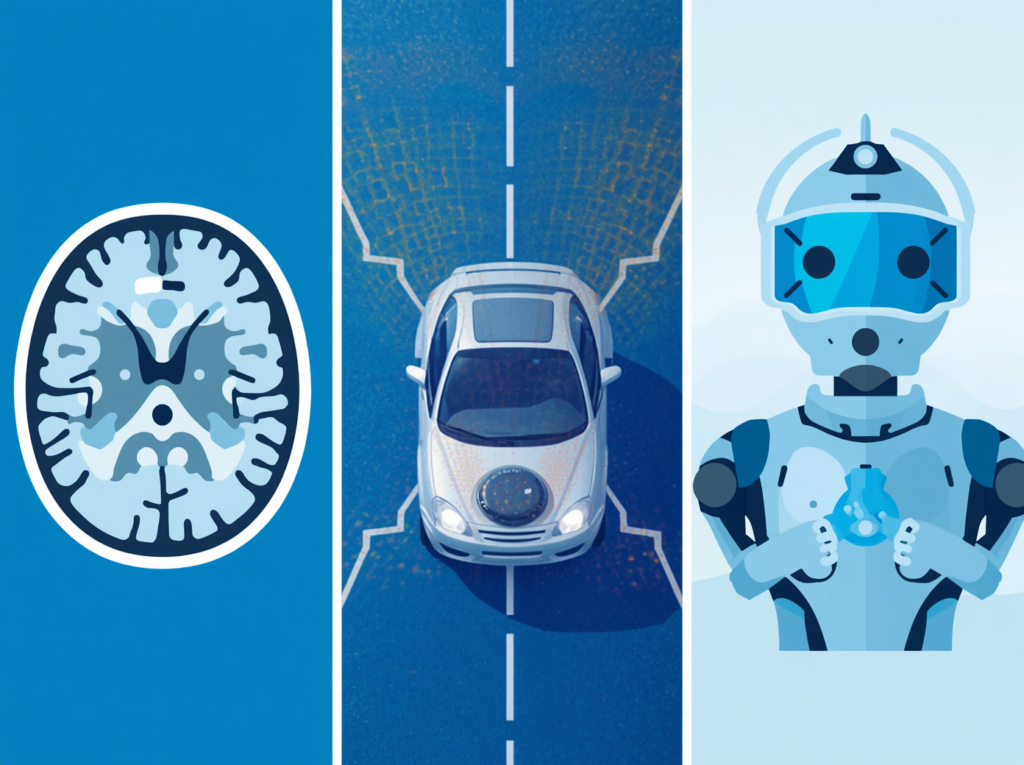
Deep learning models in the medical field analyse pathology slides, X-rays, and MRI scans with accuracy that sometimes surpasses that of skilled professionals. Drug development, diabetic retinopathy screening, and early cancer diagnosis are all undergoing change. In order to recognise pedestrians, read traffic signs, and negotiate challenging environments, autonomous cars use deep learning to evaluate camera and sensor data in real time.
Deep learning is used by language models such as Claude and ChatGPT to comprehend context, produce prose that is human-like, translate between languages, and provide complex answers. “Deep Learning Explained” identifies these three areas as the most influential applications available today, each of which represents a true advancement in what was previously believed to be technically feasible.
Creative AI: Art, Music, and Video Generation
In ways that even its creators did not completely foresee, deep learning has found its way into the creative realm. Deep learning is used by programs like Midjourney, DALL-E, and Stable Diffusion to create beautiful, unique artwork from straightforward text descriptions. On demand, Suno and Udio create creative music in any genre. Sora and Runway use written instructions to produce realistic video.
This creative explosion is regarded by “Deep Learning Explained” as one of the deep learning revolution’s most important cultural effects. For the first time in history, a machine is able to produce anything that emotionally affects people—not by replicating, but by truly creating something new. This poses important queries regarding authorship, creativity, and the essence of art.
How to Start Learning Deep Learning — Your Practical Path Forward

Conceptual understanding of deep learning is a terrific place to start, but practical application is the ultimate goal. The beauty of the present is that deep learning is now more accessible than ever thanks to the tools, courses, computer capacity, and communities required. “Deep Learning Explained” concludes with an honest and useful guide to begin your deep learning journey because inspiration wanes rapidly in the absence of guidance. From comprehending this blog to creating your first actual deep learning model, here’s exactly what you need to do, in what order, and with what tools.
Prerequisites and First Steps
Make sure you grasp the fundamentals of machine learning from Blog #2 of this series and are at ease with Python before delving into deep learning. The suggested starting place is quick from there.The free “Practical Deep Learning for Coders” course from AI is renowned for being easily accessible, practical, and presented in simple English.
Get free GPU access right away by using Google Colab for your coding environment. Create your first image classifier by training a model to distinguish between two objects that personally interest you. “Deep Learning Explained” suggests beginning with photographs because the outcomes are immediate, visually appealing, and extremely fulfilling. It is quite exciting to witness your own model accurately recognise something for the first time.
Going Deeper: PyTorch, Research Papers, and Community

After you’ve created your initial model, use PyTorch, which is now the most widely used deep learning framework in both industry and academics. Examine actual datasets on Kaggle. Start reading summaries of research papers on websites such as Arxiv Sanity and Papers With Code. Keep up with deep learning researchers on X (previously Twitter); the community is vibrant, transparent, and very knowledgeable. “Deep Learning Explained” is adamant that learning in public significantly speeds up development.
Projects should be shared, questions should be asked without shame, and minor victories should be publicly celebrated. With constant work, it is truly possible to get from beginner to practitioner in deep learning in 12 to 18 months. The resources are free. The information is accessible. Your dedication to attending each day is the only variable.
Final Thoughts
You have just embarked on a comprehensive trip through Deep Learning Explained, covering everything from artificial neurones to transformers, from backpropagation to creative AI. You now know why this technology functions, how it learns, and how it manifests itself in your daily life.
“Deep Learning Explained” is more than just an idea to commit to memory; it’s a platform upon which to build. This technology powers the most astounding AI systems in the world today. From now on, each blog in this series will expand on what you discovered today. In Blog #4, i.e. “Large Language Models (LLMs): How ChatGPT, Claude & Gemini Actually Work” we delve deeply into the realm of Large Language Models, which are the transformer-based systems that power Gemini, Claude, and ChatGPT. We’ll look at how they function, what makes them so potent, and how prompt engineering may significantly increase your productivity with these tools.
The deeper we go, the more amazing it becomes. Remain inquisitive. Continue to be consistent. Continue.
People Also Ask
"What is Deep Learning and how is it different from AI?"
The most powerful branch of AI now is deep learning. Deep Learning Explained makes it very obvious – deep learning, unlike basic AI, employs layered neural networks to learn patterns automatically from raw data, offering superhuman accuracy across picture recognition, language understanding and creative production.
"How do Neural Networks actually mimic the human brain?"
All neural networks ever constructed are inspired by the human brain. “Deep Learning Explained” shows how artificial neurones fire signals layer by layer, just like biological brain cells, learning from millions of instances until the computer can recognise faces, understand speech and make surprisingly human-like replies.
"What are the real world applications of Deep Learning today?"
Deep learning is quietly running the world around us. “Deep Learning Explained” explains the power of this technology in facial recognition, medical diagnosis, autonomous driving cars, voice assistants, language translation and creative AI tools – the most influential technology being used across all major industries across the world today.
"How can a complete beginner start learning Deep Learning in 2026?"
Starting deep learning has never been easier than now. “Deep Learning Explained” simply points every newcomer to Python foundations, quickly.free AI classes , Google Colab for free GPU access and hands on projects – develop real skills step by step with no expensive equipment and no prior knowledge needed .